A few years back Oracle asked me to design an off the shelf partner lead nurturing engine that they could use to enable their partners to market to their own databases on a shared instance of Eloqua.
They essentially wanted me to architect what I had created when I came runner up to Sony for the best EMEA lead nurturing campaign in their Markie awards on a much larger scale. If you haven’t read that yet go here: https://greg-staunton.com/eloqua-lead-nurture-markie
They wanted to have several lead nurture tracks that partners could use to identify Marketing Qualified Leads on a range of products. The different products would have a catalogue of content and prebuilt emails templates so content could be individualized by each partner and then deployed very quickly.
They problem of having a shared database by all the different partners was solved through Eloqua’s contact level security.
So grab a coffee, sit down and enjoy running through the proposal complete with lead scoring engine and campaign workflow that I sent to them.
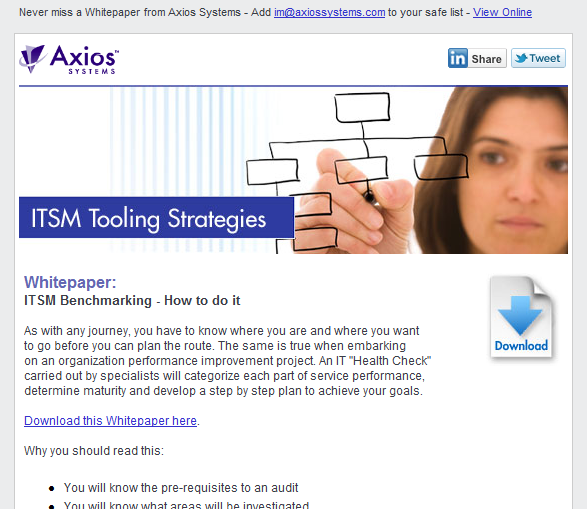
NB – The emails were screenshots from the Axios Systems campaign so please don’t be confused, these were for illustrative purposes.
Eloqua based lead nurture engine for Oracle partners overview
The Eloqua based lead nurture engine for Oracle partners has been designed to enable Oracle partners with both marketing automation technology and an approach which they would otherwise not have had access to. It combines the most powerful attributes that the Oracle Eloqua platform has to offer and delivers an off-the-shelf, 12 month, fully automated campaign. The automated campaign will push marketing assets over to campaign members in a logical order depending on the member’s interactions of lack thereof. Underpinning this campaign is a robust lead scoring model which will provide sales ready, marketing qualified leads which will result in sales.
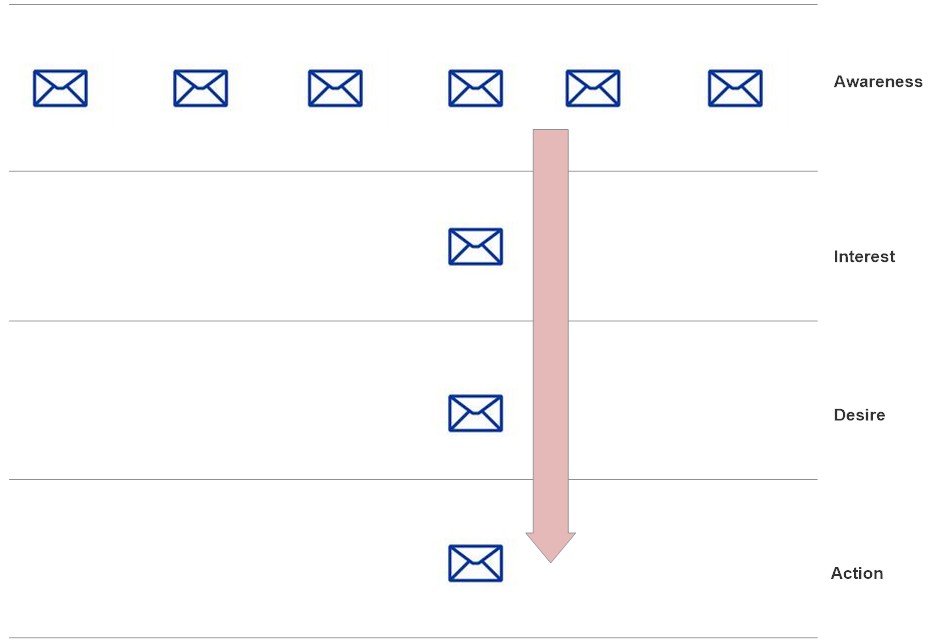
The Eloqua based lead nurture engine for Oracle partners will be based on the time tested AIDA framework. Originally proposed in 1920 to explain the process of personal selling, the AIDA framework has been rapidly adopted to develop a logical sequence of automated marketing communications which when underpinned by a lead scoring methodology will result in the creation of marketing qualified leads that are ready to be sent to sales at the appropriate stage in the buying cycle for personal selling.
The AIDA model is a four stage model:
- Awareness
- Interest
- Desire
- Action
Utilizing this framework simple four step model it is possible to development of a multi-tiered automated program spanning each stage which will last for 12 months.
All contacts that are uploaded into the Eloqua based lead nurture engine for Oracle partners will automatically be placed into the first scheduled awareness track. Should a contact download an asset from the awareness track they will be sent a related piece of messaging from the Interest track. If a contact either downloads the interest content from an email or finds it on the partner’s website, this will trigger a desire email. Finally in the exact same manner an Action email will be triggered should a desire asset get downloaded from either the partner website or the desire email.
Awareness Track
The awareness track will be developed by Oracle and your creative agency. The communications will be based on the past year of Oracle marketing campaigns that are relevant to the Partner type. These communications will be via email which will drive the prospect to a landing page that in turn will allow the user to access some valued content by submitting a form.
All net new contacts will enter into the awareness track for topic 1, email frequency will be set to two different awareness valued assets being offered with a two week break in between. Awareness assets will be pooled together under a topic heading. For example:
- Topic 1
- Awareness_Asset_1_T1
- Awareness_Asset_2_T1
- Topic 2
- Awareness_Asset_1_T2
- Awareness_Asset_2_T2
- Topic 3
- Awareness_Asset_1_T3
- Awareness_Asset_2_T3
- Topic 4
- Awareness_Asset_1_T4
- Awareness_Asset_2_T4
- Topic 5
- Awareness_Asset_1_T5
- Awareness_Asset_2_T5
- ETC
In the afore mentioned example this allows for the development of five separate campaigns to be developed on the Oracle Eloqua campaign canvas.
The typical type of content you would find on an awareness track would be high value content items such as whitepapers, analyst reports and practical guides.
A total of 24 different awareness assets will be offered over the year.
Below is an example of an awareness asset email:
When a user clicks through from an asset and visits a landing page they will be confronted with a form. The form will ask several different questions which will allow us to gather more information about the contact.
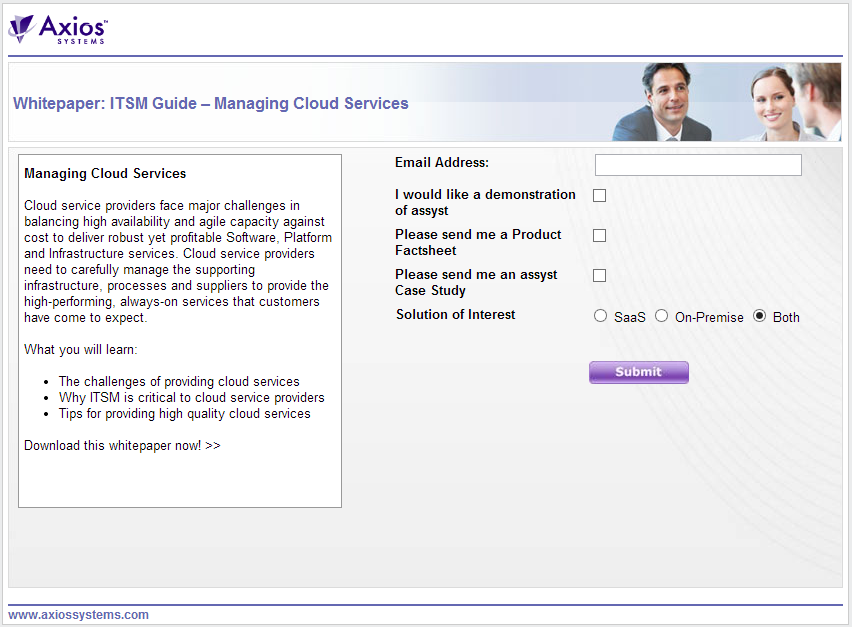
A program running in the background will be monitoring profile completeness. This will allow us to use dynamic content on an Oracle Eloqua landing page to serve up only questions that we do not have answers for. This is technique, called progressive profiling, will mean that over time we will gather a greater information about the content.
The first set of questions asked will be contact details and location.
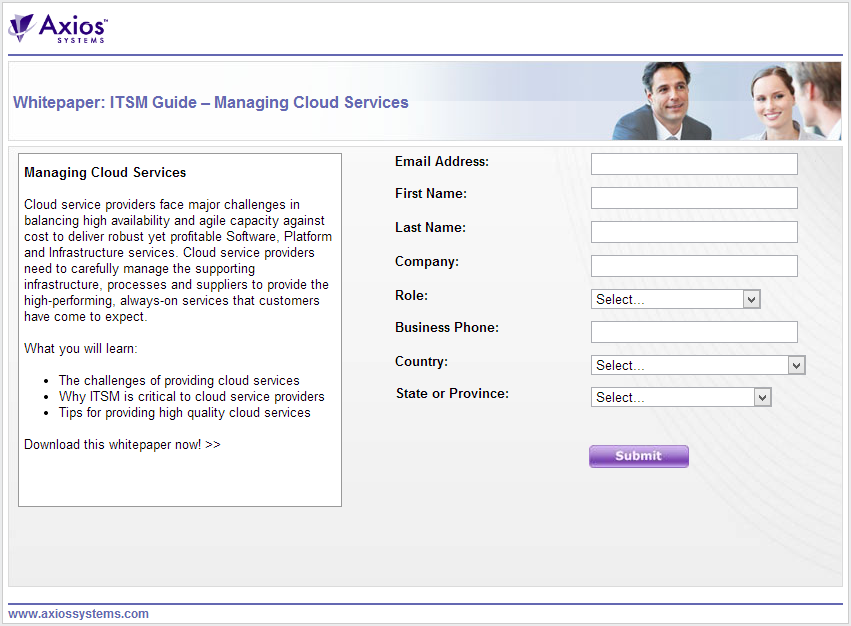
It should be noted that we will ask slightly more questions on these landing pages on the other ones. This is because these landing pages can be used in conjunction with other online contact generation campaigns, for example through PPC, Social Media, Banner adverts, etc.
Once we have all contact information we will begin asking for some slightly more detailed information, some of which will be used in explicit lead scoring.
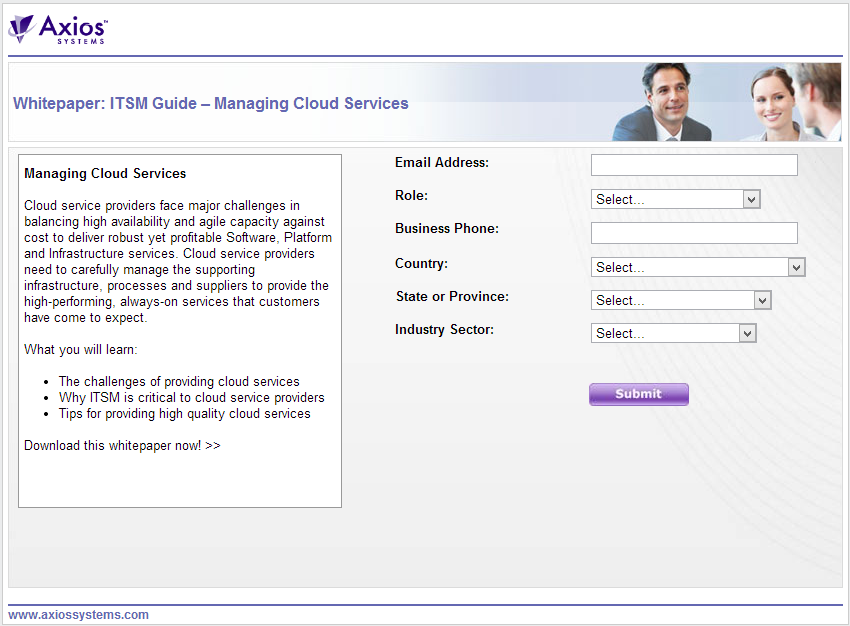
Now that we have established exactly who the contact is we will want to gether more informaiton about their suitibility for sale.
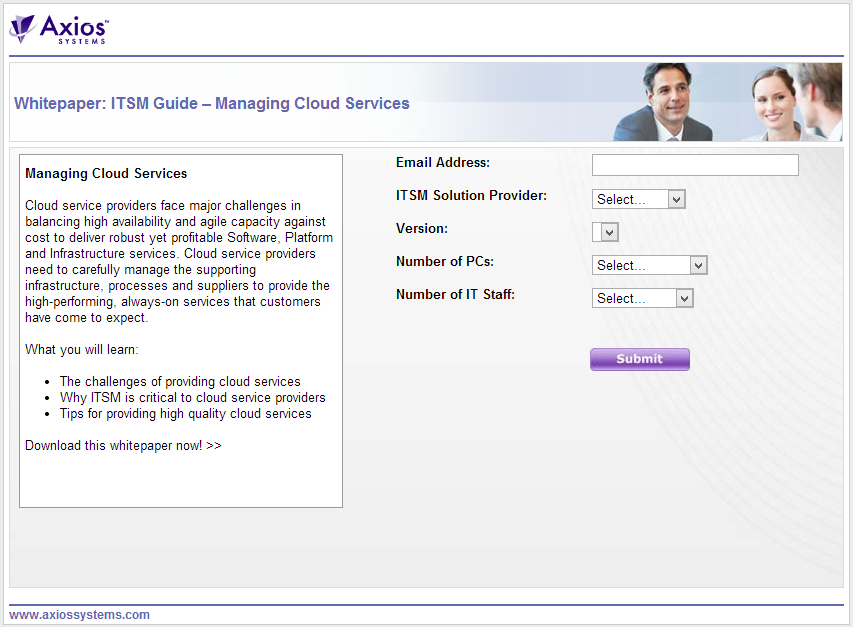
Until finally we have enough about the contact and we only ask them questions which will send them different types of sales stage specific communications.
Awareness Campaign Workflow
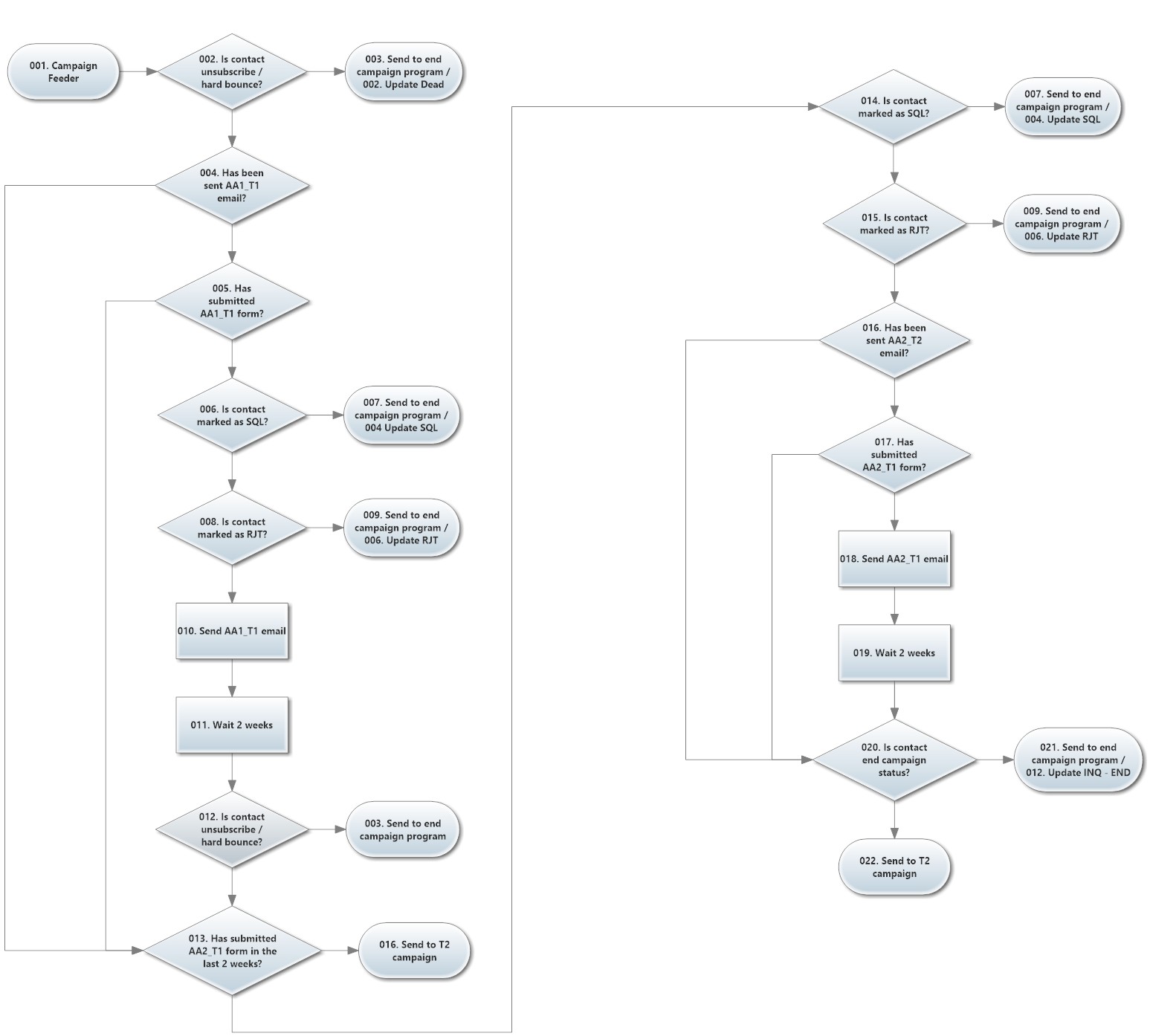
Awareness Campaign Canvas Build
001. Campaign Feeder
Shared Filter: Contact Field Creation Date is equal to today AND Partner ID is equal to XXX
Name: Oracle_XXX_AwareX_Feeder
002. Is contact unsubscribe / hard bounce
Shared Filter: Contact is unsubscribed as of now OR contact is marked as a hard bounce
Name: Oracle_XXX_SYS_Unsubscribe_Hardbounce
003. Send to end campaign program / 002. Update Dead
Campaign canvas step: Move to program builder (Oracle_XXX_SYS_End_Campaign) step 002. Update Dead
004. Has been sent AA1_T1 email?
Shared Filter: Has been sent email Oracle_XXX_AA1_T1_EDM
Name: Oracle_XXX_SYS_Sent_AA1_T1
005. Has submitted AA1_T1 form?
Shared Filter: Has submitted form Oracle_XXX_AA1_T1
Name: Oracle_XXX_SYS_Submit_AA1_T1
006. Is contact SQL?
Shared Filter: Contact field Marketing Status is equal to SQL
Name: Oracle_XXX_SYS_Contact_SQL
007. Send to end campaign program / 004. Update SQL
Campaign canvas step: Move to program builder (Oracle_XXX_SYS_End_Campaign) step 004. Update SQL
008. Is contact marked as RJT?
Shared Filter: Contact field Marketing Status is equal to RJT
Name: Oracle_XXX_SYS_Contact_RJT
009. Send to end campaign program / 006. Update RJT
Campaign canvas step: Move to program builder (Oracle_XXX_SYS_End_Campaign) step 006. Update RJT
010. Send AA1_T1 email
Campaign canvas step: Send email (Oracle_XXX_AA1_T1_EDM)
011. Wait 2 weeks
Campaign canvas step: Wait: 2 Weeks
012. Is contact unsubscribe / hard bounce?
Shared Filter: Contact is unsubscribed as of now OR contact is marked as a hard bounce
Name: Oracle_XXX_SYS_Unsubscribe_Hardbounce
013. Has submitted AA2_T1 form in the last 2 weeks?
Shared Filter: Has submitted form Oracle_XXX_AA2_T1 in the last 2 weeks
Name: Oracle_XXX_SYS_Submit_AA2_T1
014. Is contact SQL?
Shared Filter: Contact field Marketing Status is equal to SQL
Name: Oracle_XXX_SYS_Contact_SQL
015. Is contact marked as RJT?
Shared Filter: Contact field Marketing Status is equal to RJT
Name: Oracle_XXX_SYS_Contact_RJT
016. Has been sent AA2_T1 email?
Shared Filter: Has been sent email Oracle_XXX_AA2_T1_EDM
Name: Oracle_XXX_SYS_Sent_AA2_T1_EDM
017. Has submitted AA2_T2 form?
Shared Filter: Has submitted form Oracle_XXX_AA2_T2
Name: Oracle_XXX_SYS_Submit_AA1_T2
018. Send AA2_T1 email
Campaign canvas step: Send email (Oracle_XXX_AA2_T1_EDM)
019. Wait 2 weeks
Campaign canvas step: Wait: 2 Weeks
020. Is contact end campaign status
Shared Filter: Has contact been sent all email from email group AWARE or submitted all AWARE forms
Name: Oracle_XXX_SYS_End_Campaign
021. Send to end campaign program / 012. Update INQ – END
Campaign canvas step: Move to program builder (Oracle_XXX_SYS_End_Campaign) step 012. Update INQ END
022. Send to T2
Campaign canvas step: move to campaign Oracle_XXX_AWARE_T2
Interest Track
The interest track will be developed by me and your creative agency. The communications will be based on the type of product that the partner sells. Each interest communication will be mapped to topic in the awareness track.
Communications will be sent two days after the prospect has engaged with an awareness asset. Each Awareness track will have one interest asset.
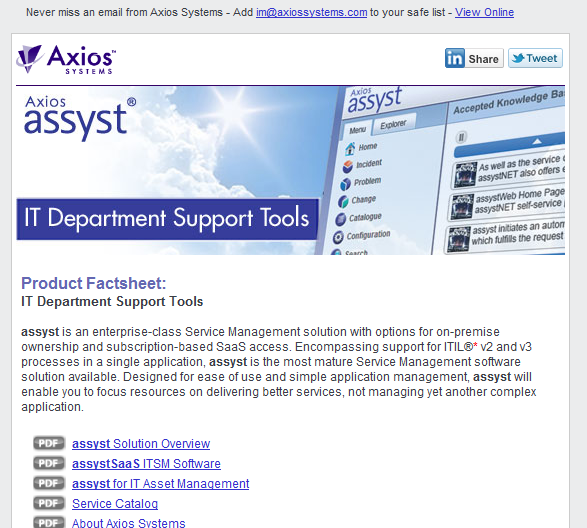
The interest asset will be a product factsheet with messaging angled towards how solution offered is relevant to the awareness topic that has piqued the prospects interest.
Typically we would look at sending over a product factsheet/product factsheets with email content tailored towards that awareness asset that the contact has just downloaded.
Below is an example of such an email:
Interest Track Campaign Workflow
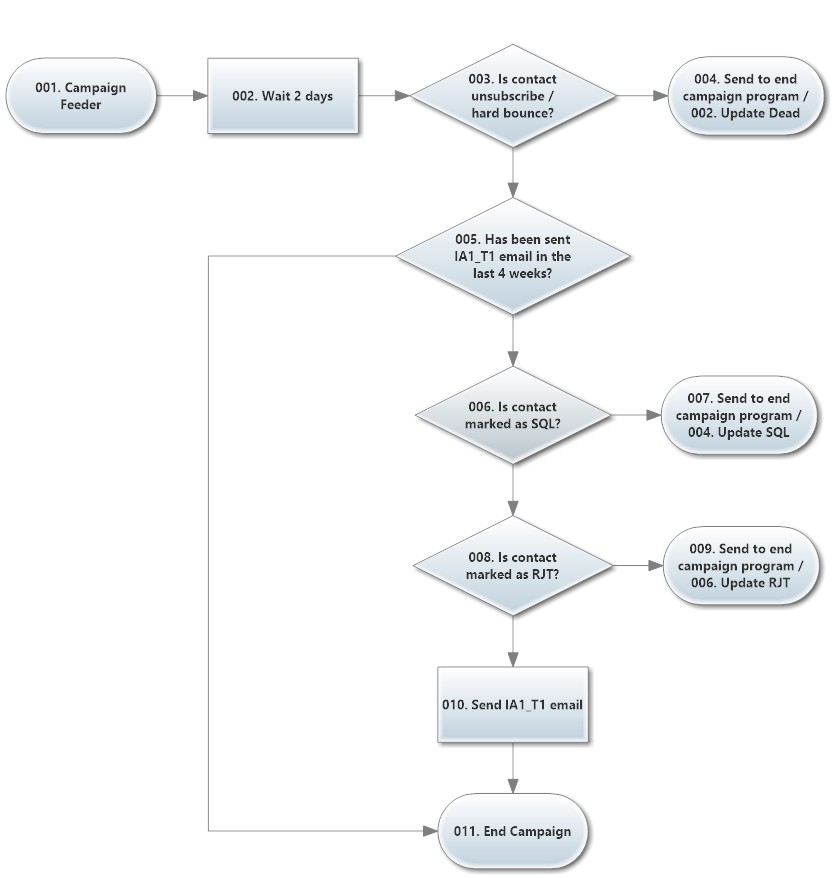
Interest Campaign Canvas Build
001. Campaign Feeder
Shared Filter:
002. Wait 2 days
Campaign canvas step: Wait: 2 days
003. Is contact unsubscribe / hard bounce
Shared Filter: Contact is unsubscribed as of now OR contact is marked as a hard bounce
004. Send to end campaign program / 002. Update Dead
Campaign canvas step: Move to program builder (Oracle_XXX_SYS_End_Campaign) step 002. Update Dead
005. Has been sent IA1_T1 email in the last 4 weeks?
Shared Filter: Has been sent email Oracle_XXX_IA1_T1_EDM at least 1 time within the last 4 weeks
006. Is contact SQL?
Shared Filter: Contact field Marketing Status is equal to SQL
Name: Oracle_XXX_SYS_Contact_SQL
007. Send to end campaign program / 004. Update SQL
Campaign canvas step: Move to program builder (Oracle_XXX_SYS_End_Campaign) step 004. Update SQL
008. Is contact marked as RJT?
Shared Filter: Contact field Marketing Status is equal to RJT
009. Send to end campaign program / 006. Update RJT
Campaign canvas step: Move to program builder (Oracle_XXX_SYS_End_Campaign) step 006. Update RJT
010. Send I1_T1 email
Campaign canvas step: Send email (Oracle_XXX_IA1_T1_EDM)
011. End Campaign
Campaign canvas step: Wait 1 Hour.
Desire Track
The desire track will be developed by me and your creative agency. The communications will be based case studies that the partner has. Each desire communication will be mapped to page tags implemented for the partner after asynchronous web tracking has been implemented on their website (product pages) and download of marketing assets (product factsheets) that have been sent from the interest track.
Communications will be sent two days after the prospect has engaged with an interest asset. Each interest asset will have one desire asset.
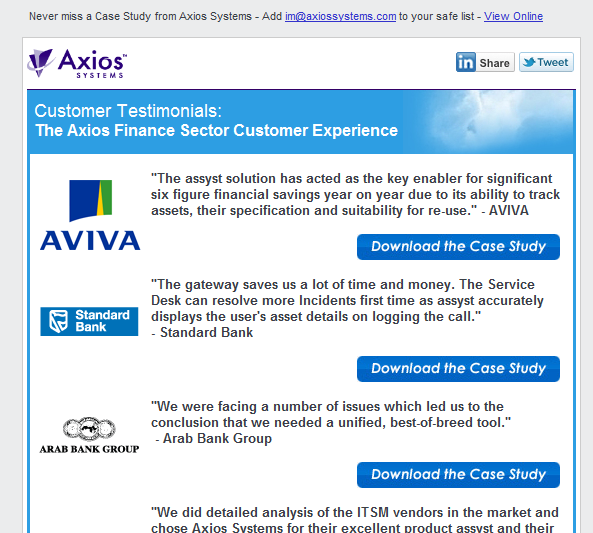
The desire asset will be a customer case study with messaging angled towards how solution offered is relevant to the interest topic (product factsheet or pages) that the prospect has engaged with. If this is not possible then a number of case studies could be bundled together which are relevant to some information we have gathered about the content.
Below is an example of such an email, in the example we are using industry sector:
Desire Track Campaign Workflow
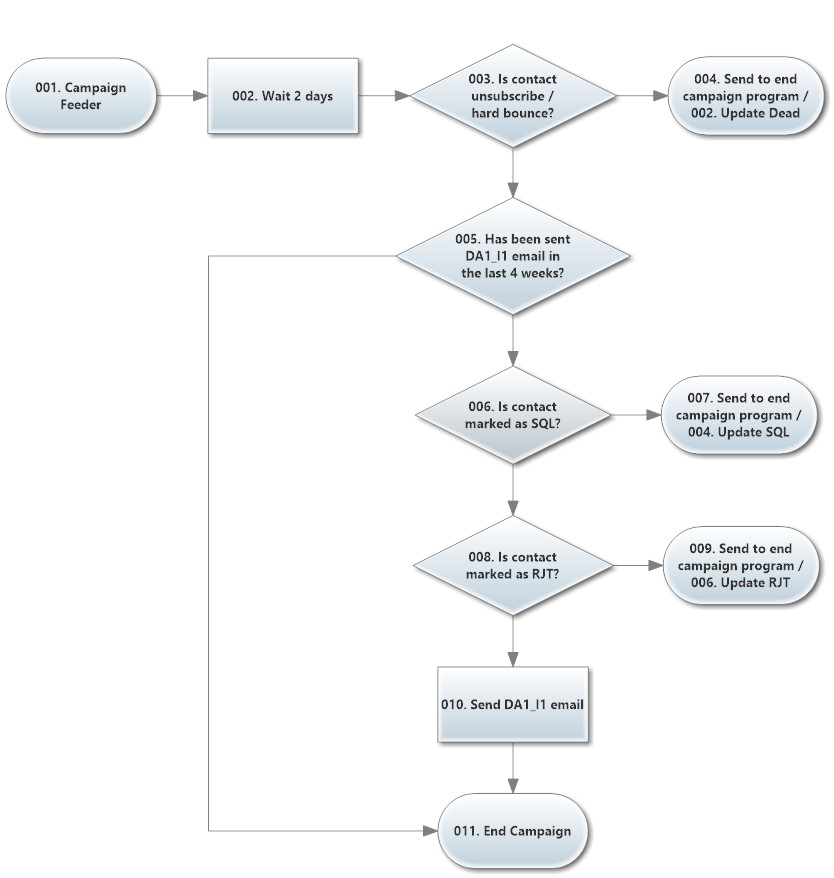
Desire Campaign Canvas Build
001. Campaign Feeder
Shared Filter:
002. Wait 2 days
Campaign canvas step: Wait: 2 days
003. Is contact unsubscribe / hard bounce
Shared Filter: Contact is unsubscribed as of now OR contact is marked as a hard bounce
004. Send to end campaign program / 002. Update Dead
Campaign canvas step: Move to program builder (Oracle_XXX_SYS_End_Campaign) step 002. Update Dead
005. Has been sent DA1_I1 email in the last 4 weeks?
Shared Filter: Has been sent email Oracle_XXX_DA1_I1_EDM at least 1 time within the last 4 weeks
006. Is contact SQL?
Shared Filter: Contact field Marketing Status is equal to SQL
Name: Oracle_XXX_SYS_Contact_SQL
007. Send to end campaign program / 004. Update SQL
Campaign canvas step: Move to program builder (Oracle_XXX_SYS_End_Campaign) step 004. Update SQL
008. Is contact marked as RJT?
Shared Filter: Contact field Marketing Status is equal to RJT
009. Send to end campaign program / 006. Update RJT
Campaign canvas step: Move to program builder (Oracle_XXX_SYS_End_Campaign) step 006. Update RJT
010. Send D1_T1 email
Campaign canvas step: Send email (Oracle_XXX_DA1_I1_EDM)
011. End Campaign
Campaign canvas step: Wait 1 Hour
Action Track
The action track will be developed by me and your creative agency. The communications will a push to contact sales by allowing the prospect to raise their hand by submitting a form on the partner website.
Each action communication will be mapped to page tags implemented for the partner after asynchronous web tracking has been implemented on their website (case study area) and download of marketing assets (case studies) that have been sent from the interest track.
Communications will be sent two days after the prospect has engaged with a desire asset.
Each action campaign will be an identical build to the desire track, the campaign will run like this:
Action Track Campaign Workflow
The action track will be developed by me and your creative agency. The communications will a push to contact sales by allowing the prospect to raise their hand by submitting a form on the partner website.
Each action communication will be mapped to page tags implemented for the partner after asynchronous web tracking has been implemented on their website (case study area) and download of marketing assets (case studies) that have been sent from the interest track.
Communications will be sent two days after the prospect has engaged with a desire asset.
Each action campaign will be an identical build to the desire track, the campaign will run like this:
Action Track Campaign Workflow
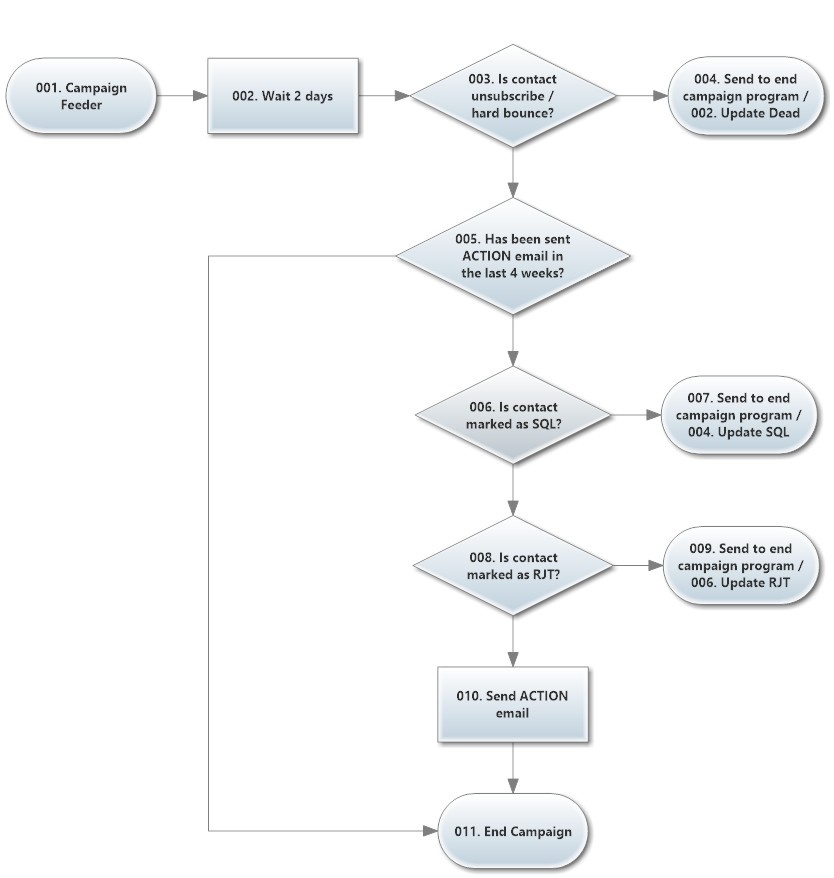
Action Campaign Canvas Build
001. Campaign Feeder
Shared Filter:
002. Wait 2 days
Campaign canvas step: Wait: 2 days
003. Is contact unsubscribe / hard bounce
Shared Filter: Contact is unsubscribed as of now OR contact is marked as a hard bounce
004. Send to end campaign program / 002. Update Dead
Campaign canvas step: Move to program builder (Oracle_XXX_SYS_End_Campaign) step 002. Update Dead
005. Has been sent ACTION_EDM email in the last 4 weeks?
Shared Filter: Has been sent email Oracle_XXX_ACTION_EDM at least 1 time within the last 4 weeks
Name: Oracle_XXX_SYS_ACTION_EDM
006. Is contact SQL?
Shared Filter: Contact field Marketing Status is equal to SQL
Name: Oracle_XXX_SYS_Contact_SQL
007. Send to end campaign program / 004. Update SQL
Campaign canvas step: Move to program builder (Oracle_XXX_SYS_End_Campaign) step 004. Update SQL
008. Is contact marked as RJT?
Shared Filter: Contact field Marketing Status is equal to RJT
009. Send to end campaign program / 006. Update RJT
Campaign canvas step: Move to program builder (Oracle_XXX_SYS_End_Campaign) step 006. Update RJT
010. Send ACTION email
Campaign canvas step: Send email (Oracle_XXX_ACTION_EDM)
011. End Campaign
Campaign canvas step: Wait 1 Hour
Share to Social Track
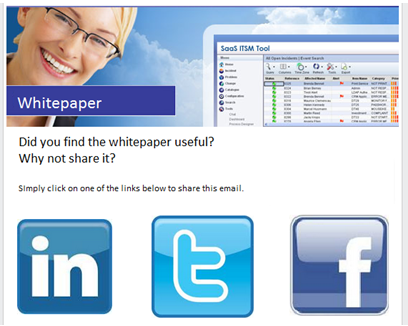
To aid partners with net new contact generation there will be a share to social email which will be sent the day after the contact has downloaded an awareness asset. The email will remain constant and will use a field merge to populate email content and dynamically populate links within the email.
Since awareness track communications are sent in two week intervals we will give contacts that do not wish to share to social a six week break if they do not interact with the email and the share the landing page with the form.
Below is an example of a share to social email:
Social Track Campaign Workflow
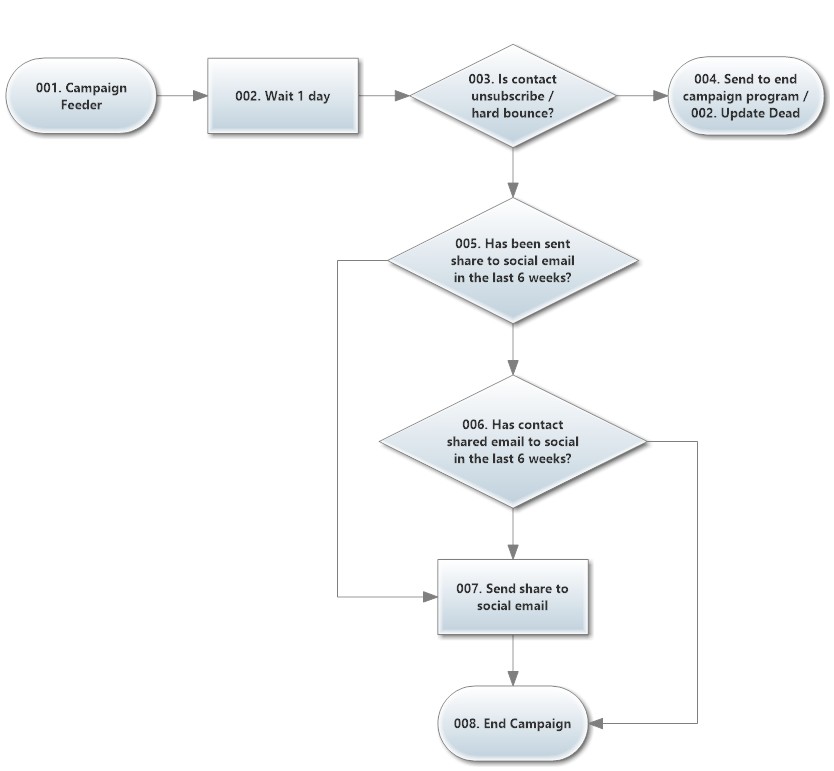
Social Campaign Canvas Build
001. Campaign Feeder
Shared Filter:
002. Wait 2 days
Campaign canvas step: Wait: 2 days
003. Is contact unsubscribe / hard bounce
Shared Filter: Contact is unsubscribed as of now OR contact is marked as a hard bounce
004. Send to end campaign program / 002. Update Dead
Campaign canvas step: Move to program builder (Oracle_XXX_SYS_End_Campaign) step 002. Update Dead
005. Has been sent share to social email in the last 6 weeks?
Shared Filter: Has been sent email Oracle_XXX_S2S_EDM at least 1 time within the last 6 weeks
Name: Oracle_XXX_SYS_S2S_EDM_SEND
006. Has contact shared to email to social in the last 6 weeks?
Shared Filter: Has clicked on link in email Oracle_XXX_S2S_EDM at least 1 time within the last 6 weeks
Name: Oracle_XXX_SYS_S2S_EDM_SHARE
007. Send share to social email
Campaign canvas step: Send email (Oracle_XXX_S2S_EDM)
008. End Campaign
Campaign canvas step: Wait 1 Hour
Eloqua based lead nurture engine for Oracle partners database structure
Contact Record
Duplicate Contact
Given the nature of the Eloqua based lead nurture engine for Oracle partners there will no doubt be different partners with the same contacts in their marketing database. This means that the contact key cannot be the email address. It will need to be the contact ID. Currently Eloqua is trialing this feature in BETA.
Contact Fields
The Oracle Eloqua platform has many fields that are pre-built in. Many of the fields that are about to be listed will already exist. There is also the ability to create custom contact field. When a field doesn’t exist we will create it.
All partners will have uniform contact fields. These fields will be used for five things:
- Contact information for tele-services / inside sales
- Data required for explicit lead scoring
- Data required for email / landing page personalization
- Contact / Partner Identification for reporting
- Collecting additional data
Collecting additional data
The suggested fields containing contact information for tele-services / inside sales are:
- Contact ID (Contact Key)
- Partner CRM ID
- Salutation
- First Name
- Last Name
- Email Address
- Telephone Number
- Job Title
- Job Function
- Company
- Industry Sector
- Country
- Country ISO
The suggested fields containing data for Explicit Lead Scoring are:
- Explicit Scoring Field 1
- Explicit Scoring Field 2
- Explicit Scoring Field 3
- Explicit Scoring Field 4
It should be noted that there is no option available which will allow partners to deviate from a four field lead scoring model. The lead scoring model will already come prebuilt.
The suggested fields containing data for email / landing page personalization are:
- Last Asset Downloaded
The suggested fields containing data for Contact / Partner identification are:
- Partner ID
Custom Objects
Each contact record will have a custom object attached to it for both campaign exit and reporting purposes. Customer Object fields will be:
- Contact ID (Contact Key)
- Email Address
- Partner ID
- Last MQL Send Date
- Sales Status
- Campaign Status
- Unsubscribe Status
- Hard Bounce Status
- Highest Marketing Engagement Level
- Awareness Asset Status (Each asset from 1 to 24)
- Interest Asset Status (Each asset from 1 to 12)
- Desire Asset Status (Each desire asset)
- Action Asset Status
Data Security
Contact Level Security will be required before any partner data enters this system. Access to the Eloqua based lead nurture engine for Oracle partners will require separate log in details for each partner. This way a security token can be attached to each user ID.
This will ensure that all data is secure and will not be accessible to all the different partners when they are setting up campaigns.
Naming Conventions
A standard naming convention will be applied to all assets. The breakdown is as follows:
Oracle_WWW_XXX_YYYY_ZZZZ
- WWW – Partner ID
- XXX – Campaign ID
- YYY – Asset ID
- ZZZ – Component ID
Lead Scoring Engine for Oracle partners
NOTE: For the purposes of this part of the proposal we must refer to the British phonetic alphabet. For those that do not use this every day the parts you need to know are as follows:
- A – Alpha
- B – Bravo
- C – Charlie
- D – Delta
- W – Whisky
- X – X-Ray
- Y – Yankee
- Z – Zulu
Overview
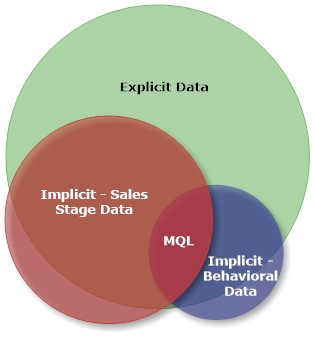
In order to pass leads over to sales / teleservices at the appropriate time a tri-dynamic Eloqua based lead nurture engine for Oracle partners lead scoring model will be developed. There will be three key areas used for determining the sales readiness of a lead:
- Firmo/Demographic Information
- Buying Cycle Stage
- Behavioral Patterns
Diagram 1 – Tri-Dynamic Lead Scoring Model Diagram (Please note that psychographic scoring was something I was experimenting with at the time)
Explicit – Firmo/Demographic Model
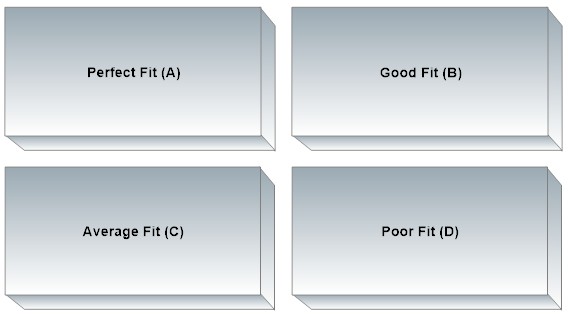
Against each contact record we have firmo/demographic information held within the contact fields. This information can be used to determine how good a fit the contact and/or their company is to purchase the partners services. Contacts will be divided into four explicit lead ratings:
- A – Perfect Fit
- B – Good Fit
- C – Average Fit
- D – Poor Fit
This part will be pre-built and determined by me and Oracle.
Diagram 2 – Explicit Data Matrix
More Information:
- Appendix 11: Explicit Filter List
Implicit – Sales Stage Model
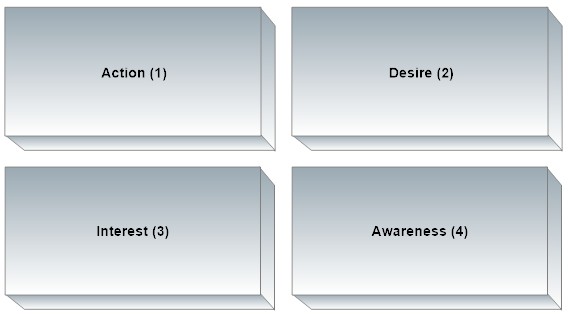
Each communication that will be sent through the Eloqua based lead nurture engine for Oracle partners is driving the prospect to exhibit a certain behavior which can be directly mapped back to the AIDA model. By monitoring their consumption of key marketing assets we can determine precisely which stage the prospect is at on the buying cycle. In turn this allows us to send over sales ready leads when they reach the appropriate stage in the buying cycle. Contacts will be divided into four implicit sales stage lead ratings:
- 1 – Action
- 2 – Desire
- 3 – Interest
- 4 – Awareness
This information will be used to create the Implicit-Purchase stage part of the lead scoring model. This part will be pre-built and determined by me and Oracle.
Diagram 3 – Implicit – Sales Stage Data Matrix
More Information:
- Appendix 12: Implicit – Sales Stage Filters
Implicit – Behavioral Patterns
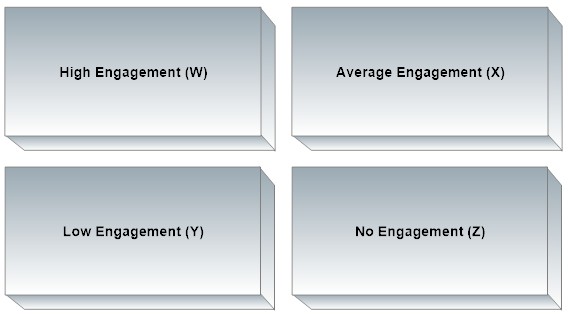
Through the tracking methods employed by the Oracle Eloqua platform it is possible to monitor and analyze behavioral patterns. These will be predefined on website visits, email opens, volume of marketing assets consumed, etc. Contacts will be divided into four implicit behavioral lead ratings:
- W – High Engagement
- X – Average Engagement
- Y – Low Engagement
- Z – No Engagement
W – High Engagement
High engagement will be determined by the contact visiting partner high valued webpages at least three times in the last week.
X – Average Engagement
Average Engagement will be determined
Over the last month the contact has visited the website and opened an email or clicked on an email.
Y – Low Engagement
Over the last two months the contact has either visited the website, opened an email or clicked on an email.
Over the last month the contact has visited the website and opened an email or clicked on an email.
Z – No Engagement
The contact is not a hard bounce / unsubscribe and over the last two months has not visited the website, opened an email or clicked on an email.
More Information:
- Appendix 13: Implicit – Behavioral Filters
Overall Lead Ratings
Each of these individual lead ratings will be used to create an over lead rating which will be used to both determine sales readiness and provide sales insight through a meaningful naming convention. It will then also be possible to develop a sales feedback loop which will enable implicit lead scoring maintenance and upgrade based on the sum of all marketing activities across every partner in the partner group.
Although the diagram below is a 1 dimensional model it explains what a 3 dimensional modal can’t due to the limitations of human perception.
Diagram 5 – Overall Lead Rating Matrix
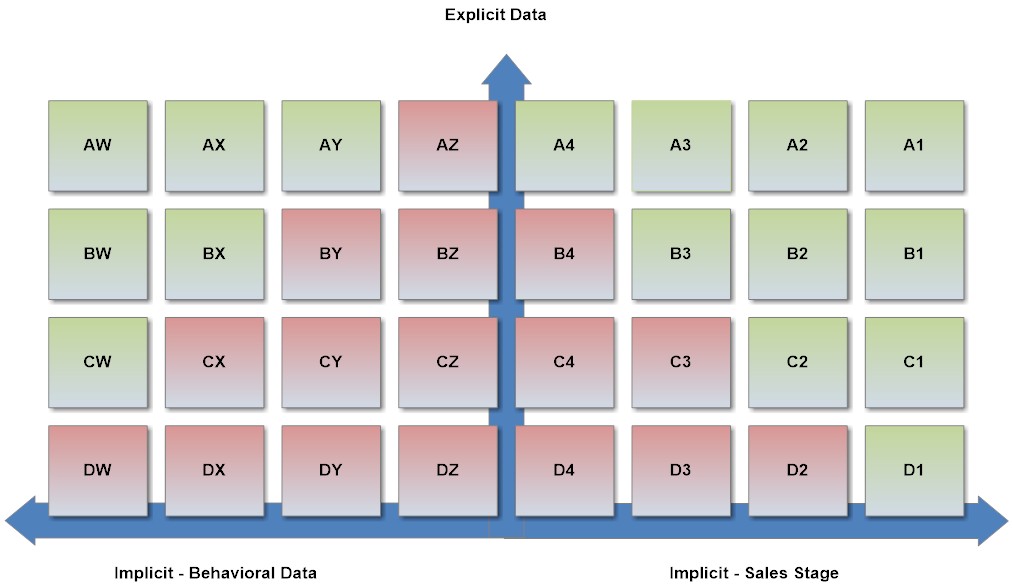
The matric above details how marketing qualified leads will be developed. The green squares indicate the rating for a marketing qualified lead,, the red squares indicate leads that are not yet ready for to be passed across to sales.
Lead Scoring Model Build
The lead scoring model will be developed in Program Builder rather than the Oracle Eloqua 10 lead scoring component. Each contact of the contact filters and program feeder will be copied over from the master filters / feeders and updated.
Background Programs
There will be several background programs other than lead scoring running for both data maintenance and reporting. These are:
- Oracle_XXX_Marketing_Effectiveness
- Oracle_Profile_Completenes
Oracle_XXX_Marketing_Effectiveness
The first background program running will be the marketing effectiveness program. Each partner will have their own unique program running. Both Oracle awareness and partner interest, desire and action assets will be being monitored carefully. Any action that takes place will then update the custom object that is attached to the contact record.
All partner contacts will run through the program as soon as any activity happens.
The fields on the custom object will have several different statuses which will update:
- Contact ID (Contact Key)
- Email Address
- Partner ID
- Sales Status
- INQ
- MQL
- SAL
- SQL
- Last MQL Send Date
- Campaign Status
- Open
- Closed
- Unsubscribe Status
- Unsubscribed
- Subscribed
- Hard Bounce Status
- Dead Contact
- Live Contact
- Highest Marketing Engagement Level
- Awareness
- Interest
- Desire
- Action
- Awareness Asset Status (Each asset from 1 to 24)
- Not Sent
- Sent
- Opened
- Clicked
- Form Submit
- Interest Asset Status (Each asset from 1 to 12)
- Not Sent
- Sent
- Opened
- Clicked
- Visited
- Desire Asset Status (Each desire asset)
- Not Sent
- Sent
- Opened
- Clicked
- Visited
- Action Asset Status
- Not Sent
- Sent
- Opened
- Clicked
- Form Submit
This information will be used for reporting.
Oracle_Profile_Completeness
A profile completeness program will be running which will be monitoring what information is held against the contact record. This will then use an update to rule to update the field tfor profile completeness.
Profile Completeness Stage 1
- Salutation
- First Name
- Last Name
- Email Address
- Telephone Number
- Company
- Country
- Country ISO
Profile Completeness Stage 2
- Job Title
- Job Function
- Industry Sector
Profile Completeness Stage 3
- Explicit Scoring Field 1
- Explicit Scoring Field 2
- Explicit Scoring Field 3
- Explicit Scoring Field 4
Profile Completeness Stage 4
- I would like to receive a product brochure
- I would like to receive a customer case study
- I would like a sales rep to contact me
This information held against the contact field for profile completeness is then used to populate the fields asked on the form the next time they contact visits the form.
Level of effort
The first set is the initial costs for the creation of the Eloqua based lead nurture engine for Oracle partners. The second set is the costs incurred for the on-boarding of each partner.
Cost Set 1: The Eloqua based lead nurture engine for Oracle partners build
DOCUMENTATION & DELIVERABLES
Output Documents
- The Eloqua based lead nurture engine for Oracle partners Sales Deck
- Partner On-Boarding Build Document
Output Deliverables
- 4 Email Templates
- 1 Template Landing Page
- 40 Awareness Emails
- 2 Template Campaigns
- 1 Template Form
- 1 Template Lead Scoring Model
- 1 Oracle XXX Marketing Effectiveness Program
- 1 Oracle Profile Completeness Program
TABLE 1: RESOURCES FOR DEPLOYING ELOQUA BASED LEAD NURTURE ENGINE FOR ORACLE PARTNERS
|
Individual Items |
Rate |
Hours |
|
Development of lead scoring model |
CONS |
24 |
|
Creation of Partner Eloqua based lead nurture engine for Oracle partners Sales Deck |
CONS |
36 |
|
Creation of Partner On-Boarding Document |
CONS |
36 |
|
Creation of 4 HTML Email Templates |
TECH |
32 |
|
Creation of HTML Emails |
TECH |
60 |
|
Creation of 2 Template Campaigns |
TECH |
21 |
|
Creation of Template Landing Page |
TECH |
4 |
|
Creation of Template Form |
TECH |
16 |
|
Creation of Template Lead Scoring Program |
TECH |
8 |
|
Creation of Background Programs |
TECH |
16 |
|
Project Management |
PM |
25 |
|
Documentation of Oracle Partner Eloqua based lead nurture engine for Oracle partners |
PM |
35 |
|
Consulting |
CONS |
96 |
|
Technical Implementation |
TECH |
157 |
|
Project Management |
PM |
60 |
|
Total |
|
313 |
Cost Set 2: On-Boarding of each partner
DOCUMENTATION & DELIVERABLES
Output Documents
- The Oracle Partner Marketing Sales Deck
- Partner On-Boarding Build Document
Output Deliverables
- 43 Emails
- 13 Landing Pages
- 24 Campaigns
- 1 Form
- 1 Lead Scoring Model
TABLE 2: RESOURCES FOR DEPLOYING PARTNER ON-BOARDING
|
Individual Items |
Rate |
Hours |
|
Creation of Awareness HTML Emails |
TECH |
24 |
|
Creation of Interest HTML Emails |
TECH |
30 |
|
Creation of Desire HTML Emails |
TECH |
15 |
|
Creation of Action HTML Emails |
TECH |
2.5 |
|
Creation of landing pages & form integration |
TECH |
60 |
|
Creation of lead scoring model |
TECH |
8 |
|
Creation of background programs |
TECH |
8 |
|
Email & Campaign Project Management |
PM |
15 |
|
Testing / Approval |
PM |
15 |
|
Consulting |
CONS |
0 |
|
Technical Implementation |
TECH |
147.5 |
|
Project Management |
PM |
30 |
|
Total |
|
177.5 |