
Whilst I have focused on Eloqua for building out a lead scoring model all the content in this blog is relevant to any marketing automation platform.
I have been on Eloqua lead scoring engagements with more clients than I choose to remember. When I start these engagements I ask marketing what they pass overt to sales. The typical answer is anyone or anything that fills out a form on a website. This means that sales is confronted with a list of “leads” that are basically just anyone that downloaded a whitepaper or signed up for a webinar.
Lead scoring allows you to pass those leads over with additional information that allows sales to prioritize them for follow up.
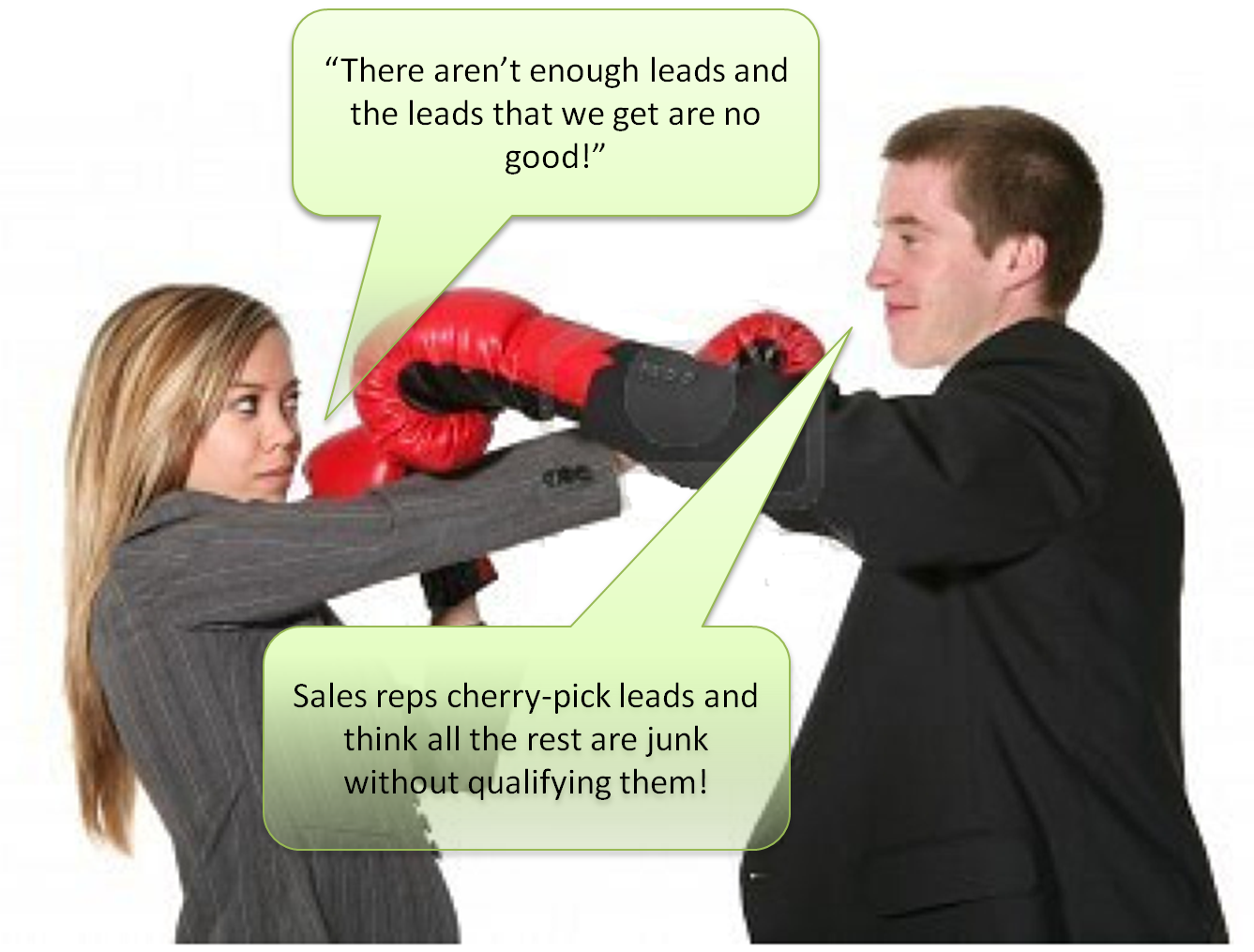
Typically when I start an Eloqua lead scoring engagement and I have marketing and sales at the table things very quickly start looking like this….
Fun fact about Eloqua lead scoring!
Companies that get lead scoring right have a 192% higher average lead qualification rate than those that do not.”
(Aberdeen Group, Lead Scoring and Prioritization)
What is lead scoring?
Lead scoring is a shared formula and methodology for ranking leads by their propensity to buy against their suitability.
For sales, scoring helps:
- Identify hot leads faster
- Improves productivity by prioritizing leads
- Accurate forecasting
- Improve sales effectiveness and pipeline
For marketers, scoring helps:
- Measure marketing effectiveness and lead quality
- Improve lead nurturing
- Deliver more value to the business
Most frequent complaints about low lead quality
A couple of years back some research was done by asking sales to say what their most common complaints about leads coming in from marketing. The results below show what they were and they make perfect sense.
Profile + Engagement = Lead Score
There are two sides to co-dynamic lead scoring in Eloqua:
- Profile
- Engagement
Profile fit
Information that a Contact volunteers through forms or that you read about on their business card or LinkedIn profile.
The stuff that tells us “we want to do business with this person”
+
Engagement
Behavior such as web visits and responsiveness to promotions, etc.
The stuff that tells us “this person may want to do business with us”
Lead scoring and process flow
As you send out your campaigns, or contacts come through to your website from other channels such as social media, search engine results, banner adverts, your contacts will consume marketing collateral that will signify which stage of the buyer journey they are on. In return for said collateral you will no doubt utilize a form so you can gather more information about the contact.
Lead scoring is fluid and scores can go up as well as down. Predominantly you will see this on the engagement side because if a contact doesn’t engage with your marketing collateral for a while the score will decay and when they are engaging with it, it will increase.
At some point some of your contacts will reach the threshold to become marketing qualified leads and then get passed over as leads to your sales teams through your CRM integration.
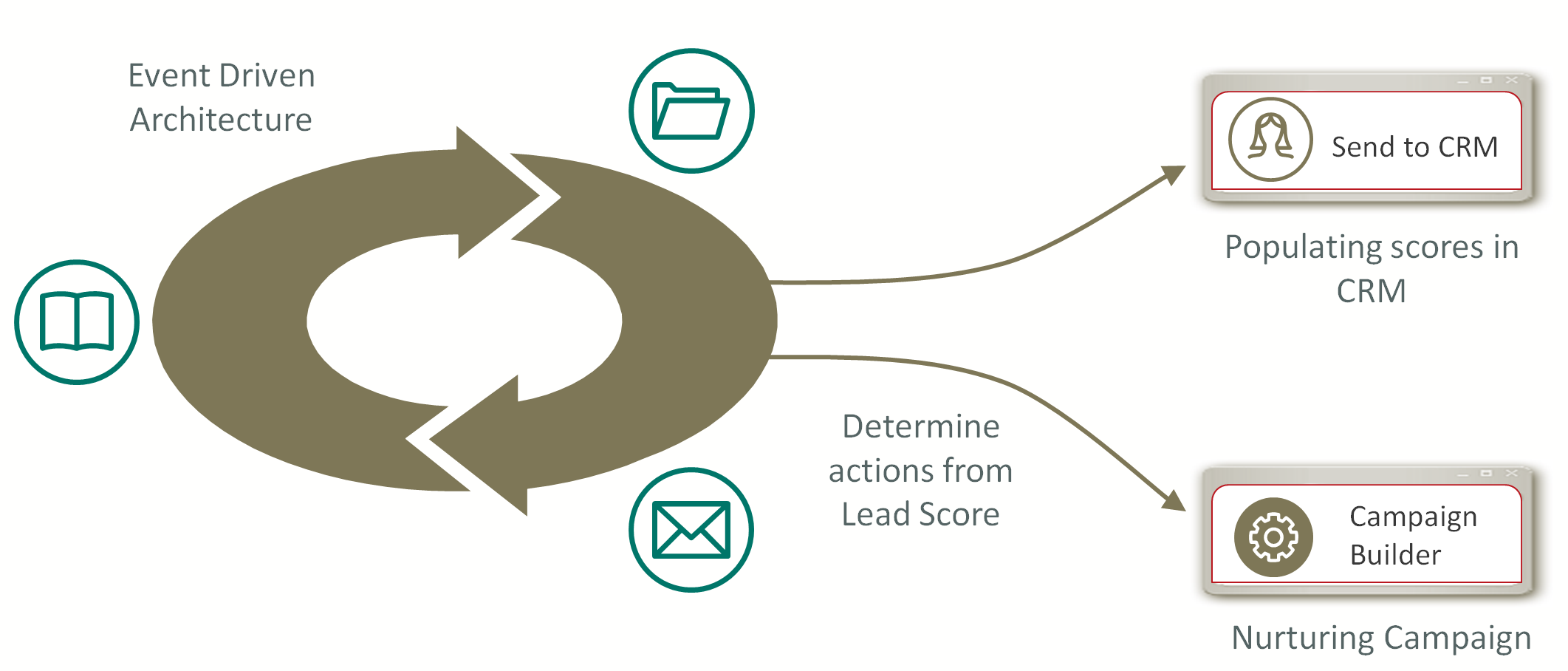
Lead scoring and lead management in Eloqua
Let’s take a quick look at the types of things that are used to score both profile and engagement.
Profile (Demographic)
- Job function
- Seniority
- Company size
- Industry
- Current product
Engagement (Behavior & Activity)
- # of page views
- # of downloads
- Type of content consumed
- Types of pages viewed
- Recency of activity
Lead scoring matrix
Co-dynamic lead scoring in Eloqua is the combination of both profile rating and engagement rating. For example A1, B4, C3, etc. The letter signifies how good the fit of the contact is for being able to purchase your product or even if it is suitable. Engagement shows which stage of the buyer journey they are at. Below are two tables that show you what they mean.
|
Profile |
Rating |
|
Perfect |
A |
|
Good |
B |
|
Average |
C |
|
Poor |
D |
|
Level of Engagement |
Rating |
|
Action |
1 |
|
Desire |
2 |
|
Interest |
3 |
|
Awareness |
4 |
Lead scoring conceptualized
I want to help you conceptualize your database with lead scoring.
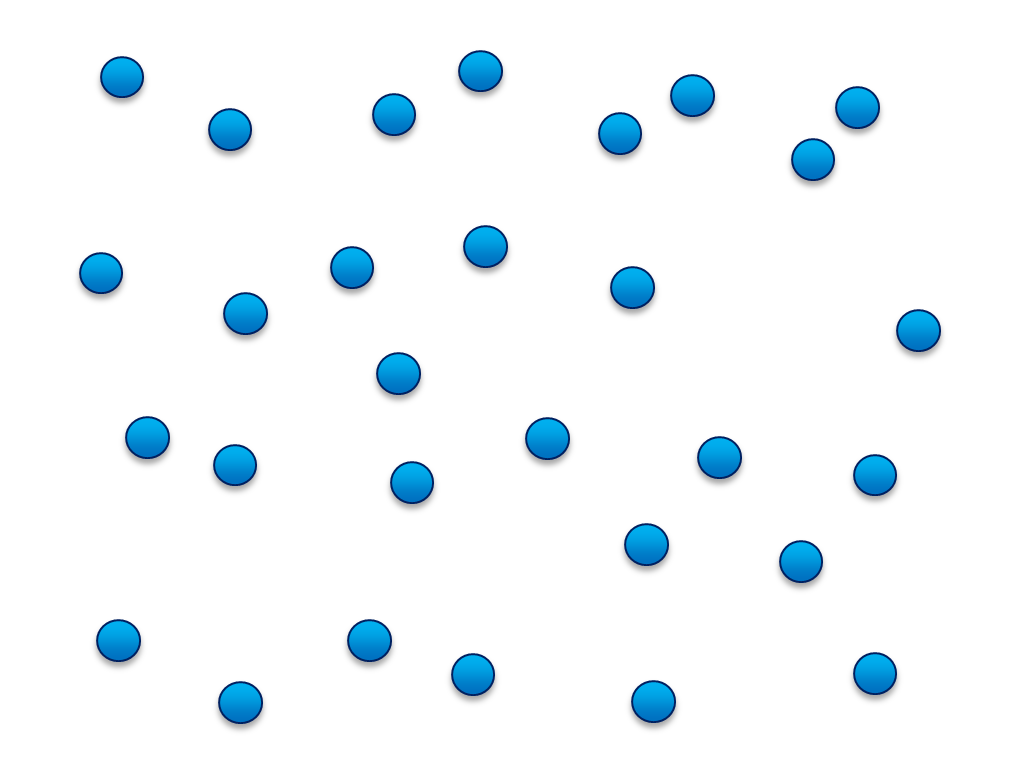
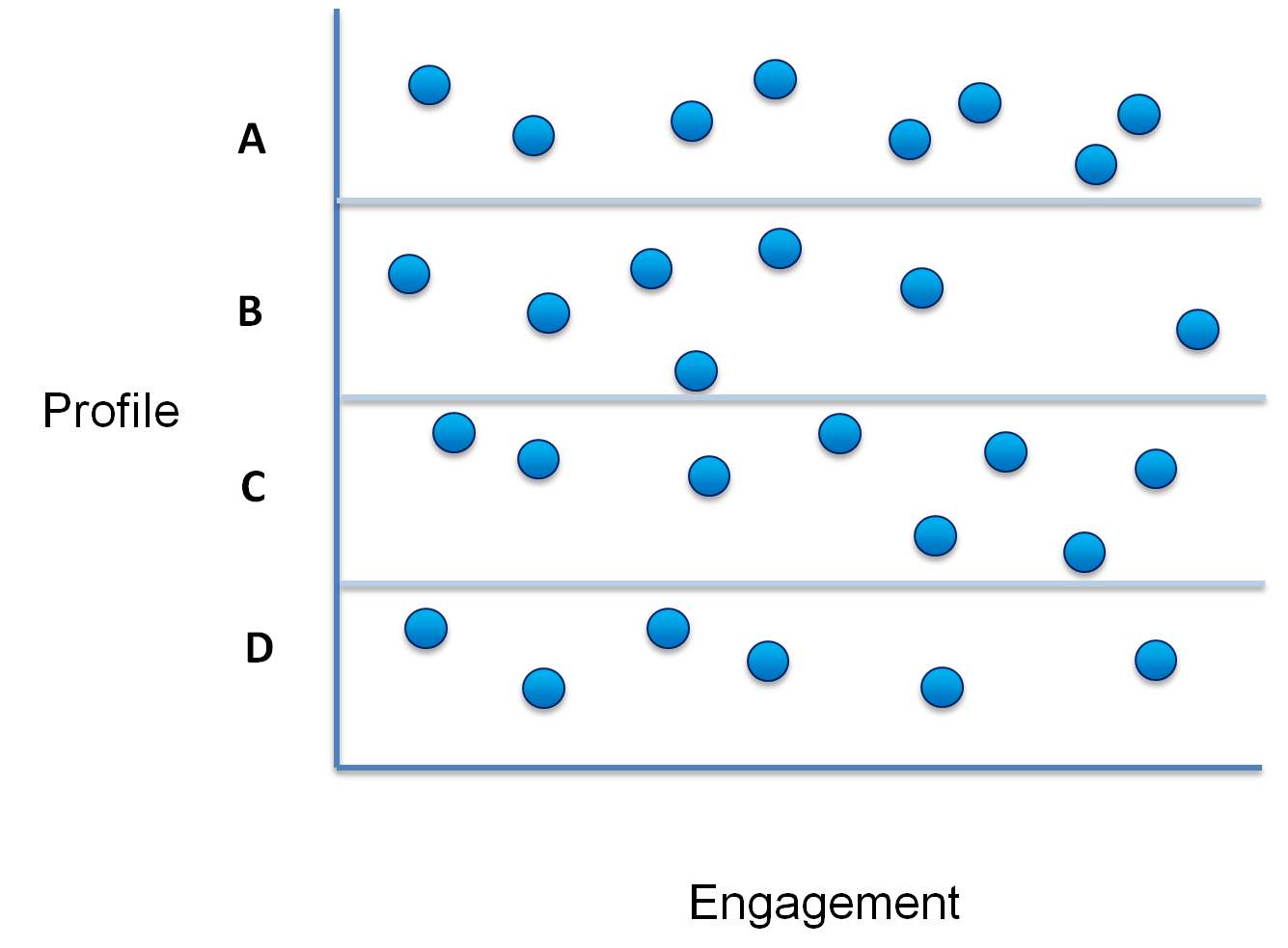
Imagine that each of these blue dots are contacts in your database.
First let’s add some axis. On one side we have profile and on the other we have engagement.
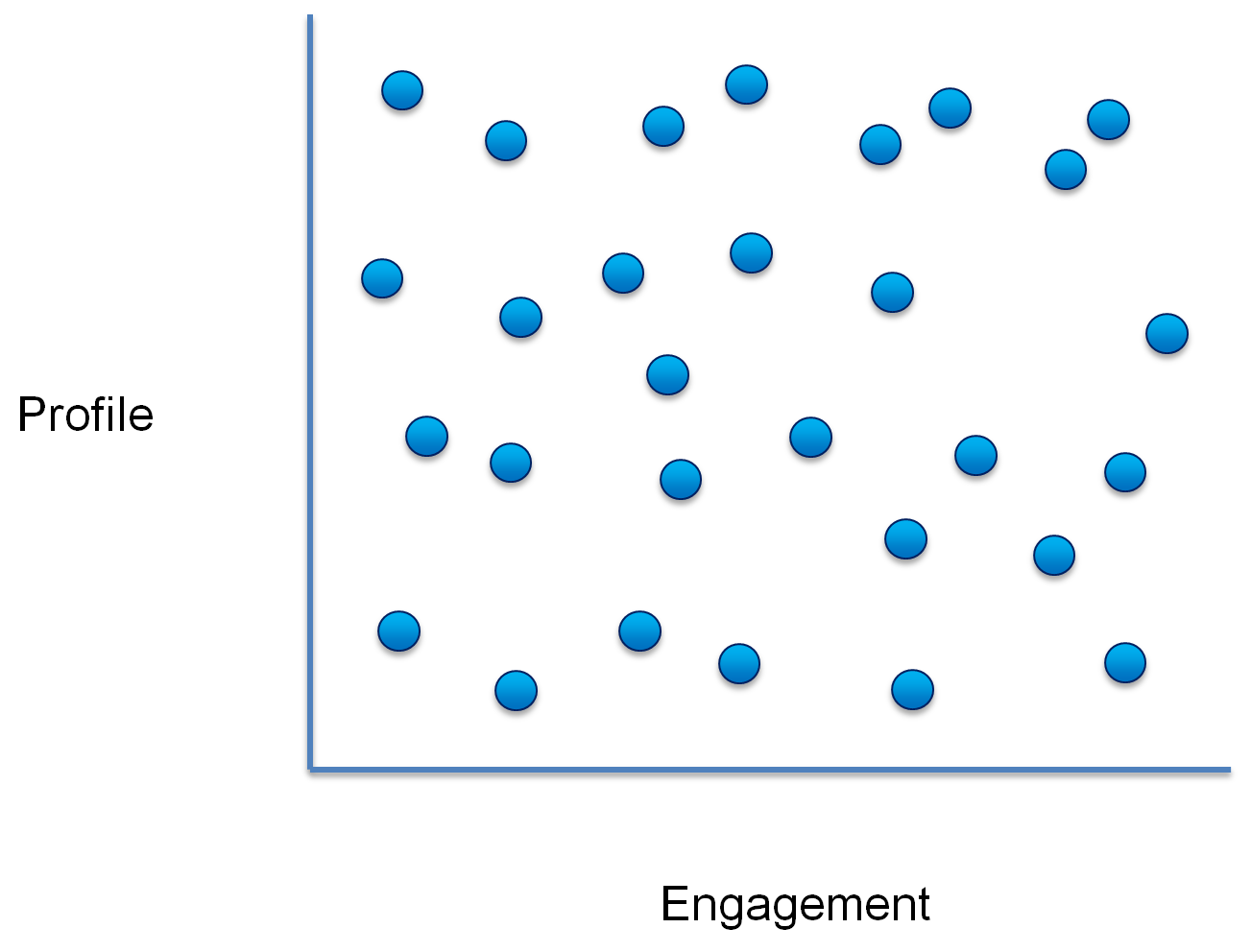
Now we are going to slice up the profile axis with the letters we used above that signify how good a fit the contact is based on the information you have about them.
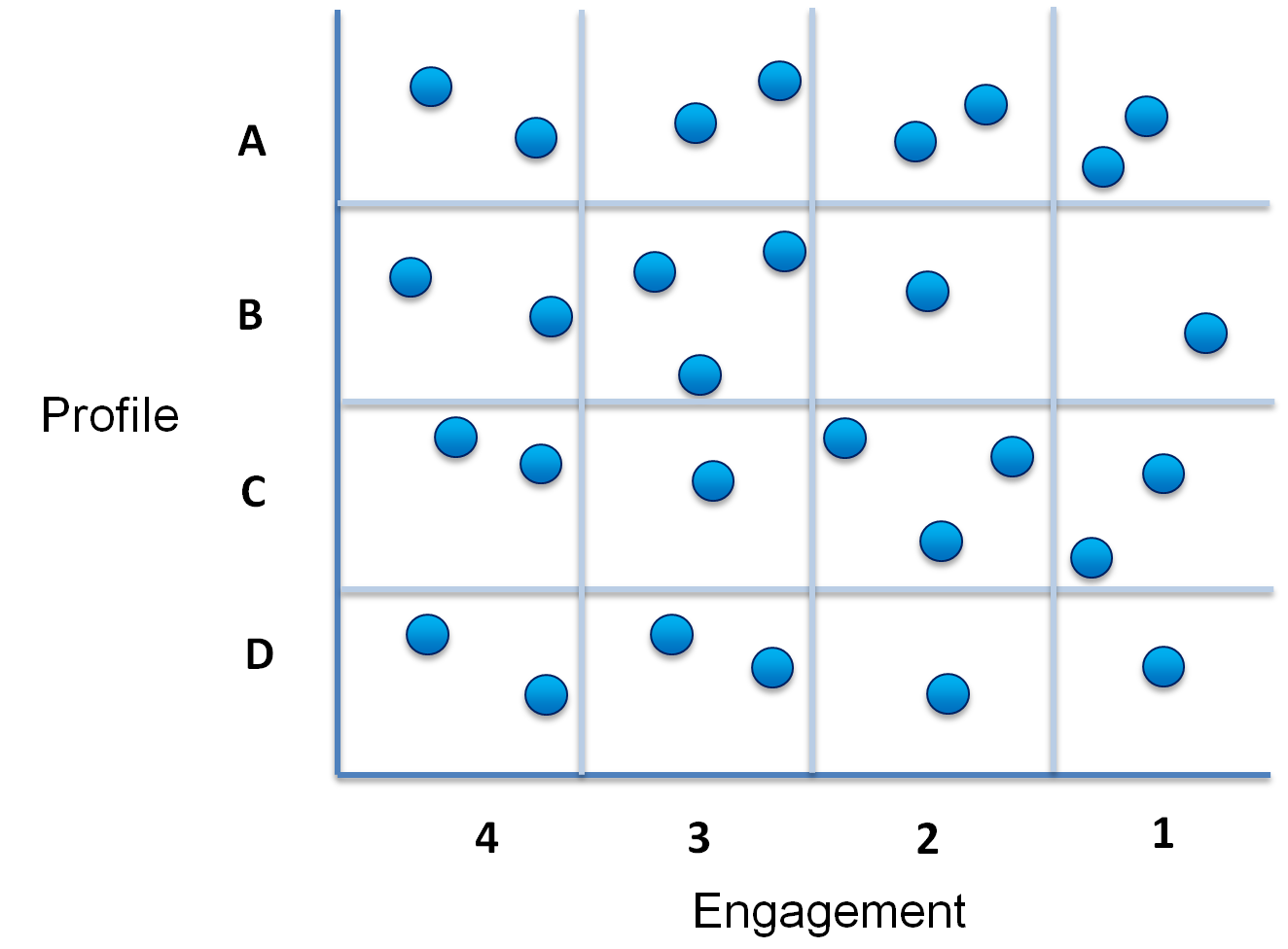
Next we slice up the other access with the numbers that signify the Eloqua lead score for engagement. We use the numbers that we went over above.
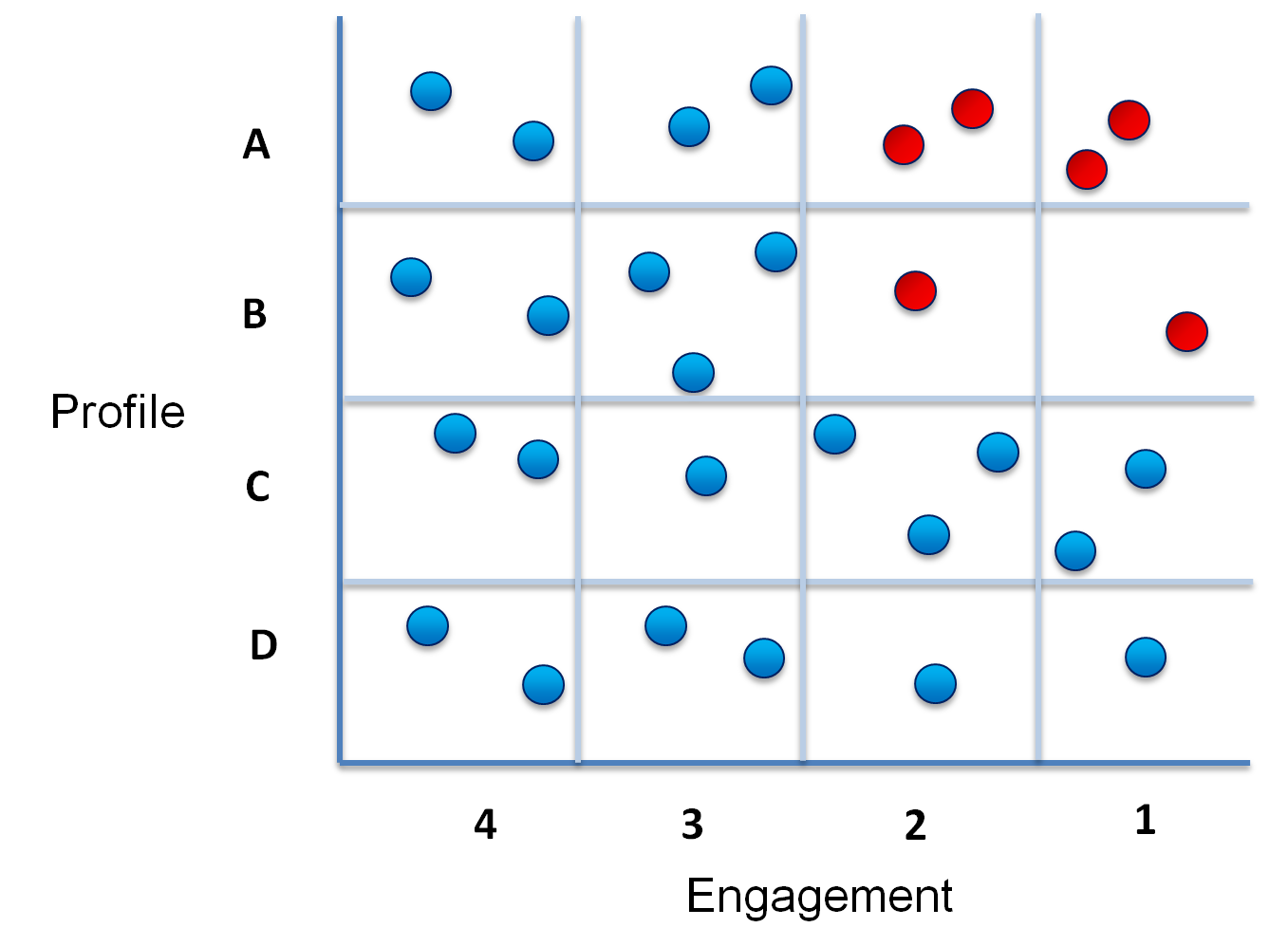
From here you can identify which are your marketing qualified leads (colored in red) and then send them over to sales through your CRM synch.
Combination or profile and engagement
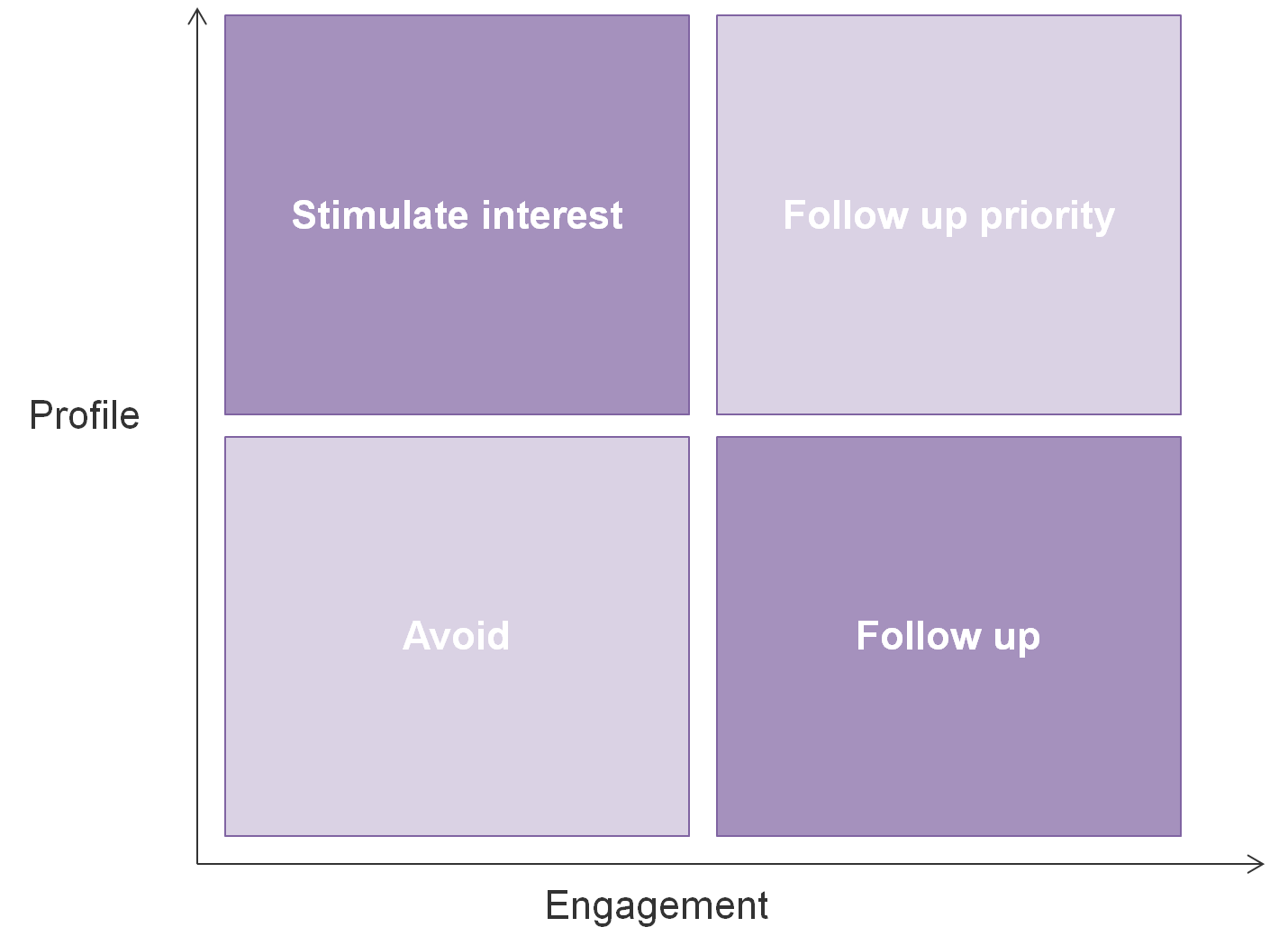
Each of the different combined lead ratings allows you to describe what type of lead they are and it also tells you what marketing actions you should take with that contact.
|
Score |
Description |
Marketing Action |
|
A4 |
The right prospect but no interest |
Priority but may need specific “why now” messaging |
|
B1 |
Good fit and very interested |
Send to sales queue for follow-up. |
|
C1 |
Not the ideal prospect but very interested |
Will they ever be a good fit? Continue to nurture |
|
D4 |
Wrong Fit. No interest |
Fulfil request and segment out |
Actions to take based on lead score
In fairness it is pretty simple to work out what to do with each of your different contacts based on their combined lead rating.
Real Eloqua lead scoring case study
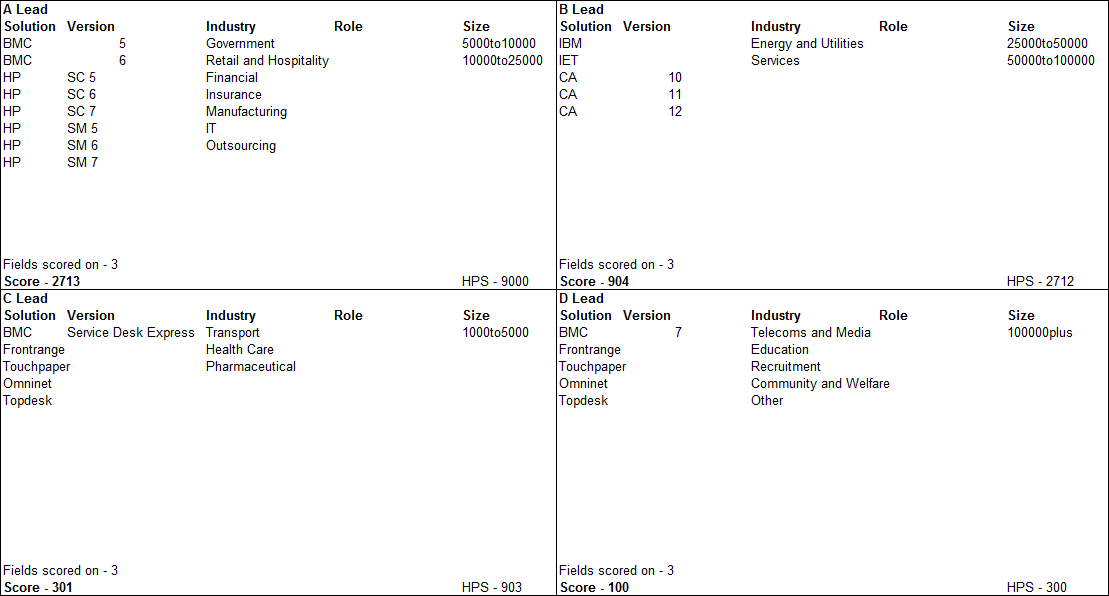
Over the years I have helped companies build their own lead scoring models but the first one I ever designed and subsequently built was when I was a marketing manager. Below is the actual first pass at the model.
Profile scoring (real)
Remember earlier when I told you that you need to keep the number of fields down that you are scoring on? Well in this case we chose three fields:
- Solution
- Industry
- Size of company
I got all the answers from sales, they told us exactly which fields they would scan before deciding on if that contact’s company could or would do business with us. Then I got them to place the different options that we had in our CRM into one of the four buckets, A, B, C or D.
Engagement scoring (real)
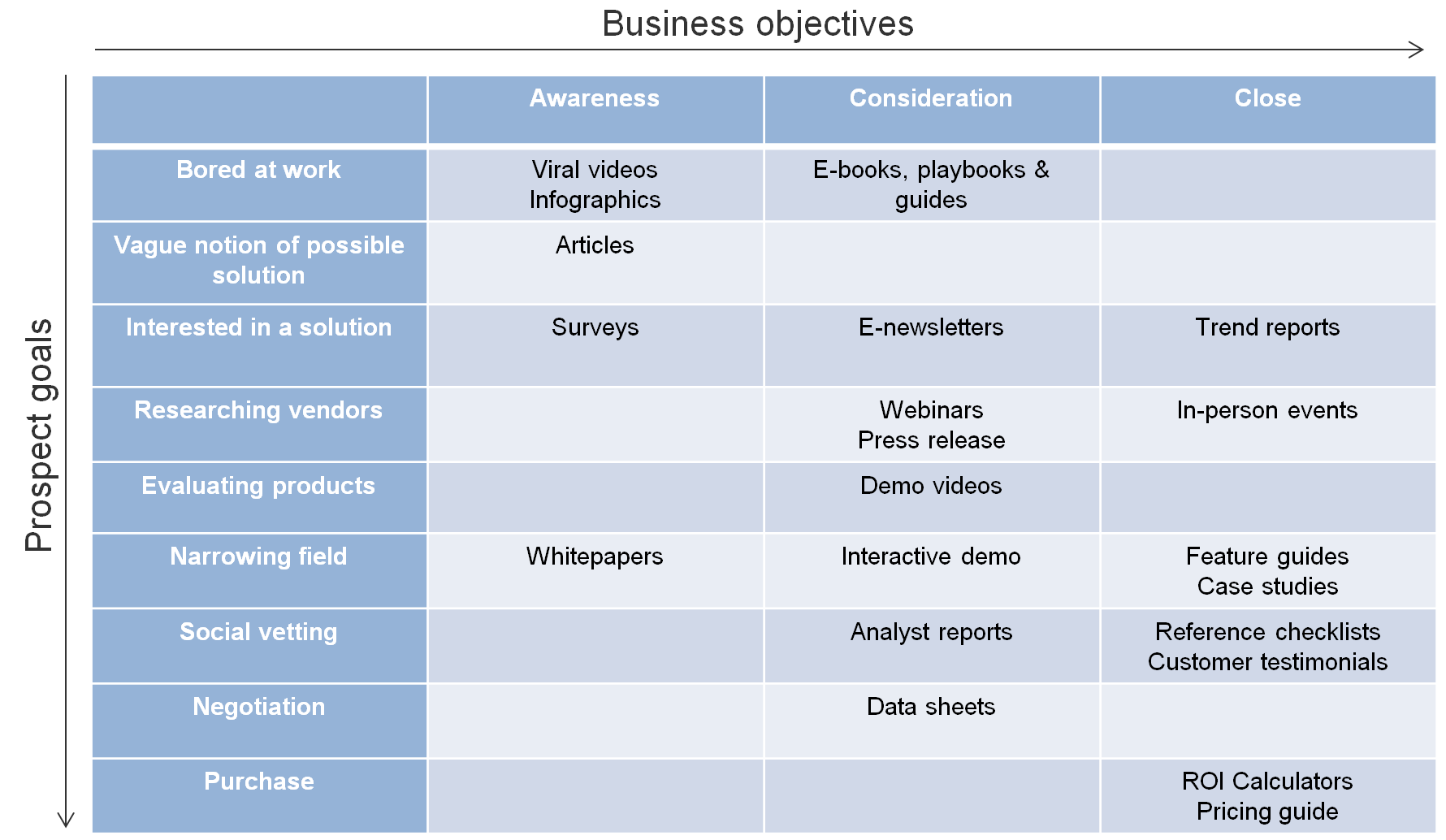
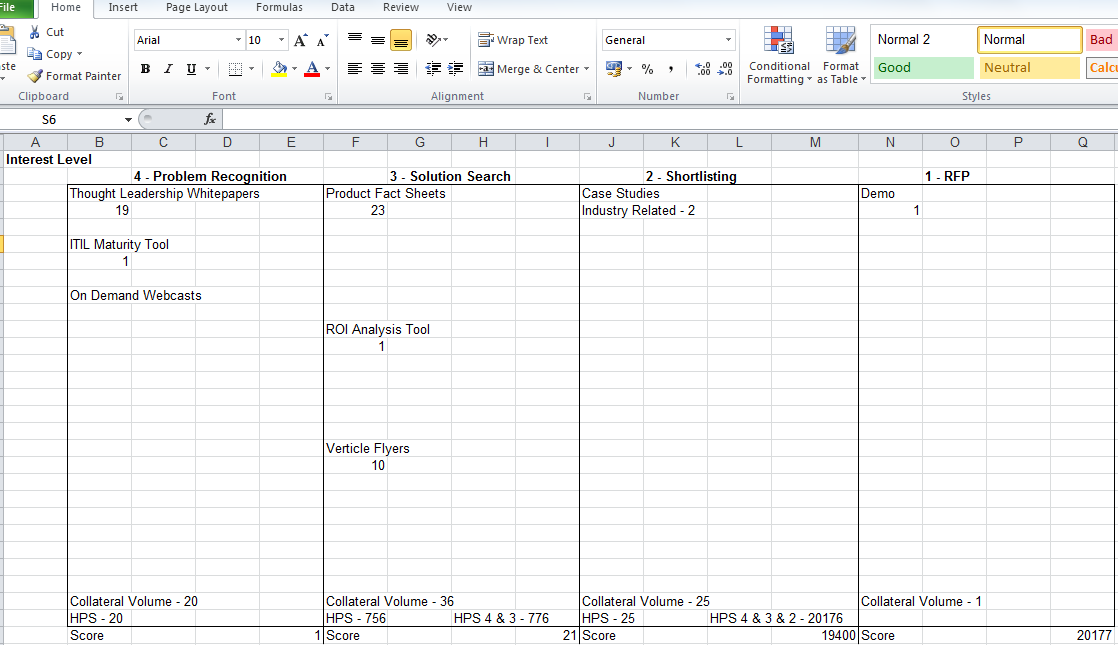
Next I gathered together the marketing department and we categorized the different marketing collateral into a taxonomy and then placed the different types of collateral into the stage of the buyer journey we thought would be most appropriate.
To guide them I used a content grid like this:
Then we came up with the engagement side of the lead scoring model.
Updating your lead scoring model
Building the perfect lead scoring model is not like shooting fish in a barrel, it’s like trying to catch smoke and you have to be sly, quick like the wind.
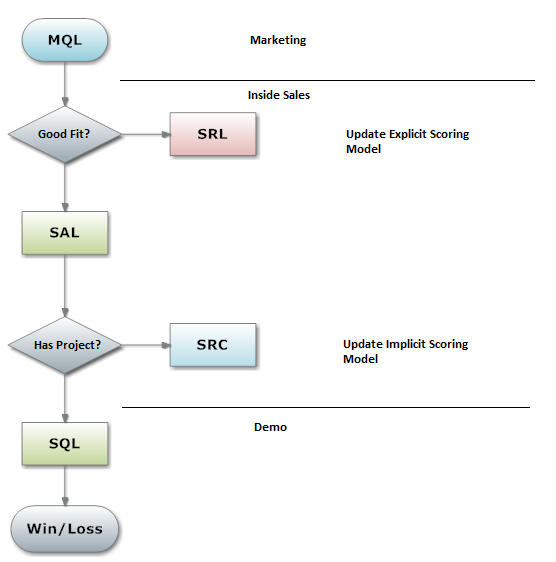
Once the lead scoring model is in place and it is generating marketing qualified leads you will need to have a mechanism in place so you can refine your model. To do this you need to categorize the different statuses that sales use for leads into buckets. I have found that using a modified Sirius 4 step model works best because it is simple.
Let’s look at the modified model that I like to use:
|
Acronym |
Sales Status |
Description |
|
MQL |
Marketing Qualified Lead |
Marketing have identified a lead and have passed it over to inside sales for pre-qualification. |
|
SAL |
Sales Accepted Lead |
Inside sales looks at the lead and determines this is a company they can do business with, they then pass it over to sales to identify if there is indeed an opportunity here by converting it into a SQL. |
|
SRL |
Sales Rejected Lead |
Inside sales looks at the lead and identifies that there is no chance this company can purchase from you. They reject it. |
|
SQL |
Sales Qualified Lead |
Sales makes contact with the lead and find out that there is an opportunity for sale and so the sales process can kick in. |
|
SRC |
Sales Recycled Lead |
Sales reaches out and whilst the contact is the right person and the company would be in a position to purchase from you sadly there is no opportunity in the foreseeable future so the lead gets passed back to marketing to continue to nurture. |
|
Win |
Win |
You sell your product and everyone is happy! |
|
Loss |
Loss |
The opposite of the above. |
Once you have bucked up the different sales statuses into a simpler method you can start to refine your model. When contacts get rejected you need to update the Profile model by identifying trends in the profile data that give an indication why.
Similarly but in a roundabout way you will need to look at what marketing collateral recycled leads have been looking at, identify trends and update your Engagement model.
Using your lead scoring model to enable Revenue Performance Management
Once you have your mechanisms in place for trapping and detecting both recycled/rejected leads you can tie your lead scoring model into a revenue performance management model.
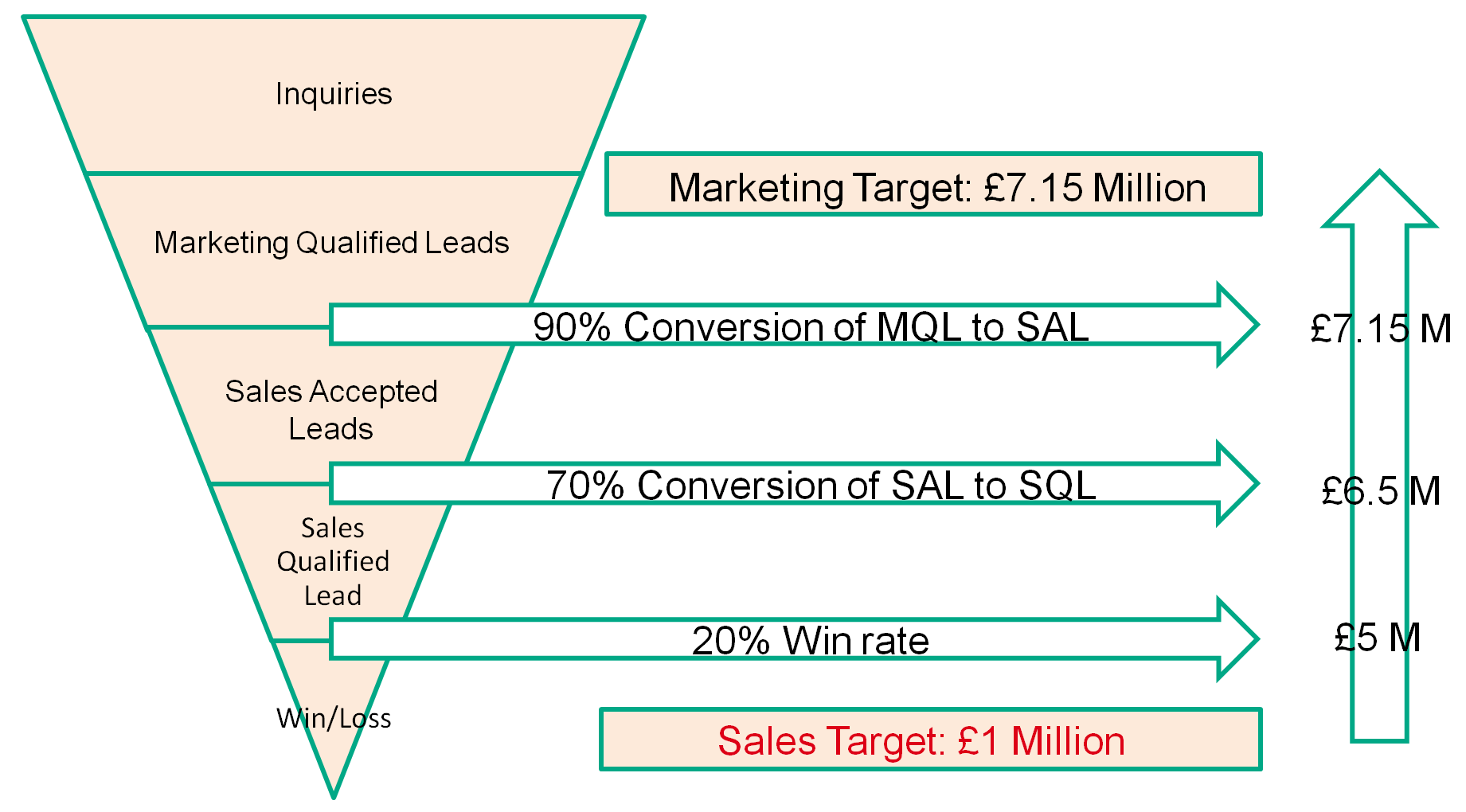
You need to measure your fall out rate in a percentage for MQL -> SAL, SAL -> SQL and finally your win loss rate.
If you can assign a potential revenue for a sale based on things like company size, etc for leads coming in then you will able to use the same metrics as sales for identifying if your campaign was a success.
You can see in the diagram below that I have given fall out rates (these are actually what Sirius decisions said was best in class I believe) that in order for sales to mathematically hit their target, marketing would need to produce a substantially higher volume of potential revenue.
Of course it would be easy to shoot what I have just shown you full of holes because there are all sorts of other variables not considered in this simplistic model but at least it’s a move in the right direction, eh?
Lead scoring tips
I hope you have found this article useful. I will leave you some final advice on designing your lead scoring model…..
Lead score dont’s
- Do not score on too many criteria
- Do not score on open-text fields
- Be wary of scoring on BANT questions (Budget, Authority, Need, Time-frame)
Common pitfalls
- Relying on BANT from lead forms
- Asking for too much information
- Not asking for information at the right time
- Assuming bigger companies or job titles are better
If you are interested in help with a lead scoring please email me or use the contact page.