
Did the nurture generate a lead, or did the connector manufacture one?
Greg Staunton
The argument in one sentence
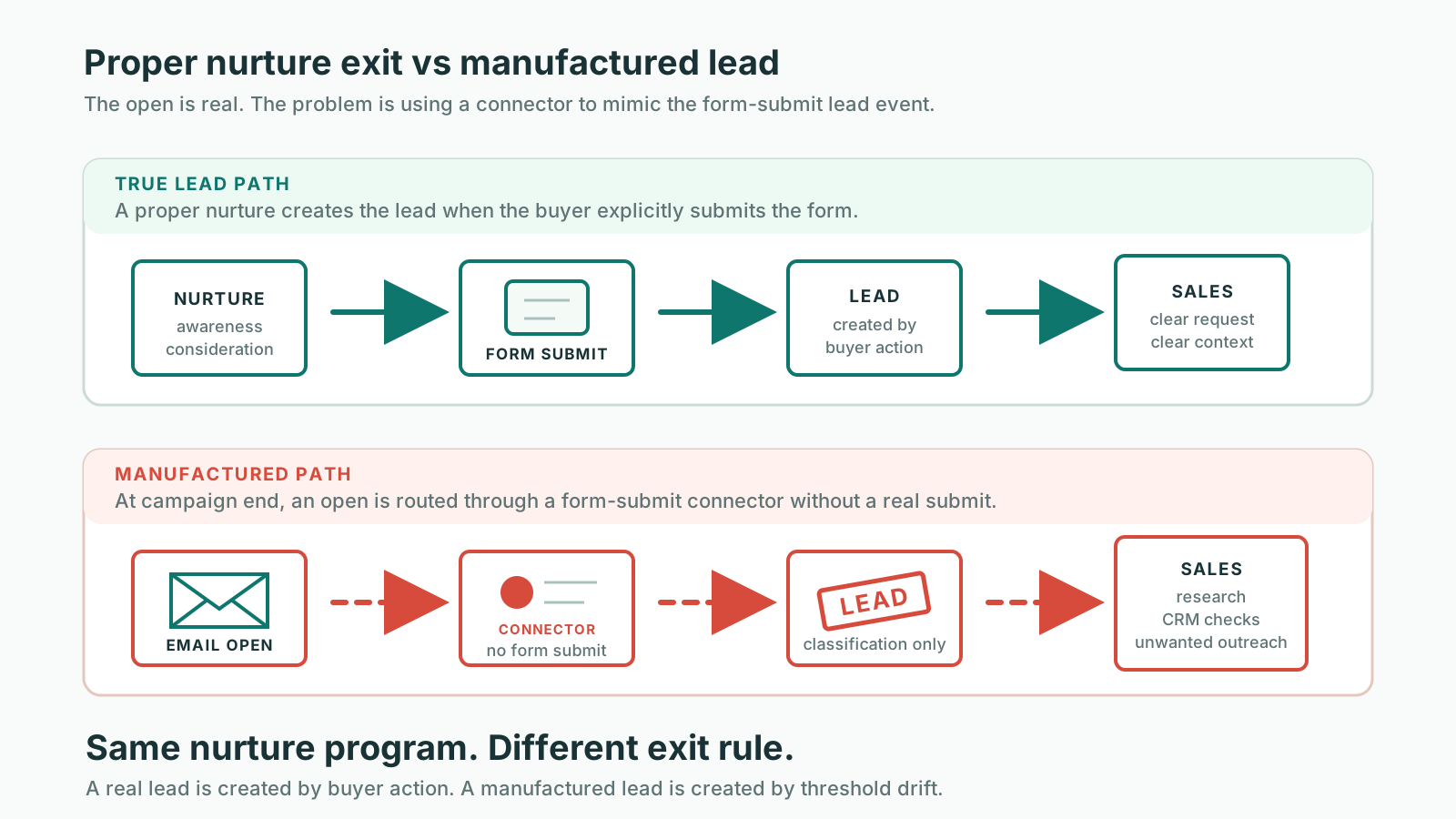
A properly staged Eloqua nurture should create a lead when the buyer takes the qualifying action, such as submitting the form. When Marketing uses a form-submit connector to convert an email open into that same lead event on the fly, it manufactures a lead record, inflates apparent demand, pollutes the pipeline, wastes Sales capacity, distorts conversion metrics, harms customer experience, and teaches Sales that Marketing handoffs cannot be trusted. The fix is not just a stricter rule. It is a better target: campaign-created opportunity value after Sales has accepted or qualified the handoff.
An email open is an interaction, not a form submission
Start with the strongest version of the opposing argument. Assume the email open is genuine. Assume a real person deliberately opened the message. The question still remains:
Where, exactly, did buyer demand enter this process?
In a proper lead nurture, stages matter. The nurture educates, filters and progresses people toward a meaningful exit. If the intended lead creation moment is a form submit, then the form submit is the evidence. It is the buyer crossing a line.
Opening an email can mean curiosity, habit, recognition of the sender, internal research, accidental relevance, or simple housekeeping. It can be useful campaign engagement. It can help Marketing understand content interest. It can inform nurture decisions. But by itself, it does not show a project, a budget, a buying group, urgency, willingness to speak with Sales, or permission to treat the person as sales-ready.
A form-submit connector changes the operational record, not the buyer's behaviour. If the buyer did not submit the form, the connector has not discovered demand. It has made an email open look like the event that was supposed to prove demand.
Opening an email is behaviour. Making it look like a form-submit lead is a governance decision.
Gartner names the quality-versus-quantity problem
Gartner's public abstract for How to Improve Lead Quality by Aligning With Marketing puts the conflict plainly:
"Sales organizations prioritize lead quality. However, marketing-sourced leads are generated to meet quantity goals."
Source: Gartner, How to Improve Lead Quality by Aligning With Marketing, published February 22, 2024.
That is the heart of the problem. Sales experiences the lead as work. Marketing reports the lead as production. If the organisation rewards Marketing for volume while Sales is judged on conversion, the two teams are not merely misaligned. They are being asked to optimise different realities. A form-submit connector can intensify that gap because it lets the system create the same handoff object without the same buyer action.
Gartner makes the pipeline version of the same point in its public sales pipeline guidance: handing leads off to Sales, along with responsibility for turning them into opportunities, is no longer an effective go-to-market strategy. The modern answer is not a bigger pile of handoffs. It is Sales, Marketing, and Sales Development working in parallel around the way buyers actually buy.
"Handing 'leads' off to sales" is no longer enough.
Source: Gartner, Sales Pipeline: A Complete Guide for Sales Leaders and Reps.
The incentive risk is real, even when nobody is acting badly
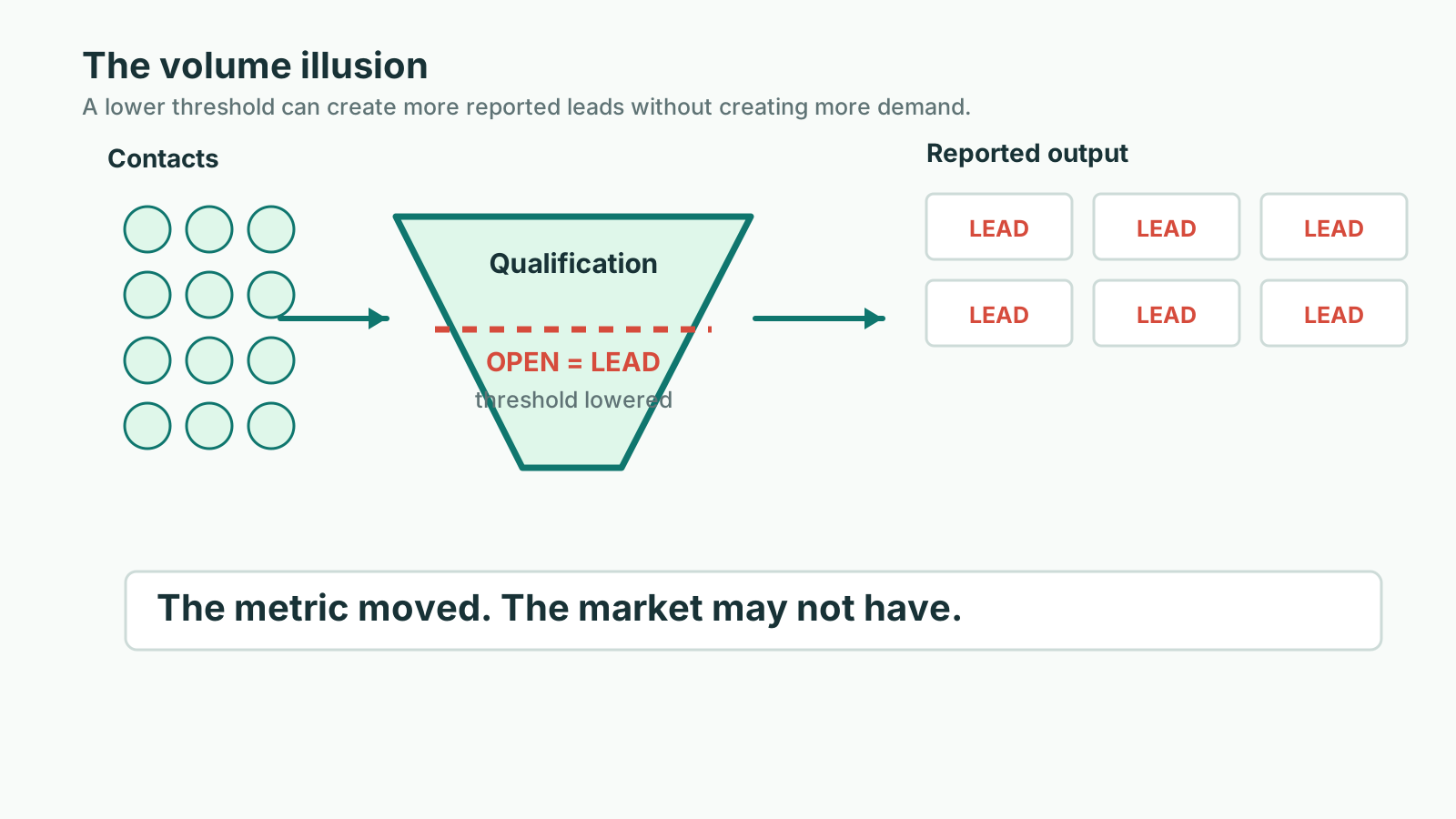
This is not an accusation that any specific Marketing team is manipulating bonuses. Without evidence, that would be unfair. The governance risk is sharper and more useful: if Marketing owns both the lead target and the lead definition, lowering the threshold can manufacture success without creating new demand.
If a performance plan says "generate 5,000 leads" and the operating definition says "the campaign-end connector can create a lead from anyone who opened an email", the simplest route to target is not necessarily better positioning, stronger content, better account selection, or deeper buying-group engagement. It can be a looser exit rule. That is a control problem.
When Marketing can redefine the output it is rewarded for producing, lead volume needs governance.
Set Marketing an opportunity value target, not a lead volume target
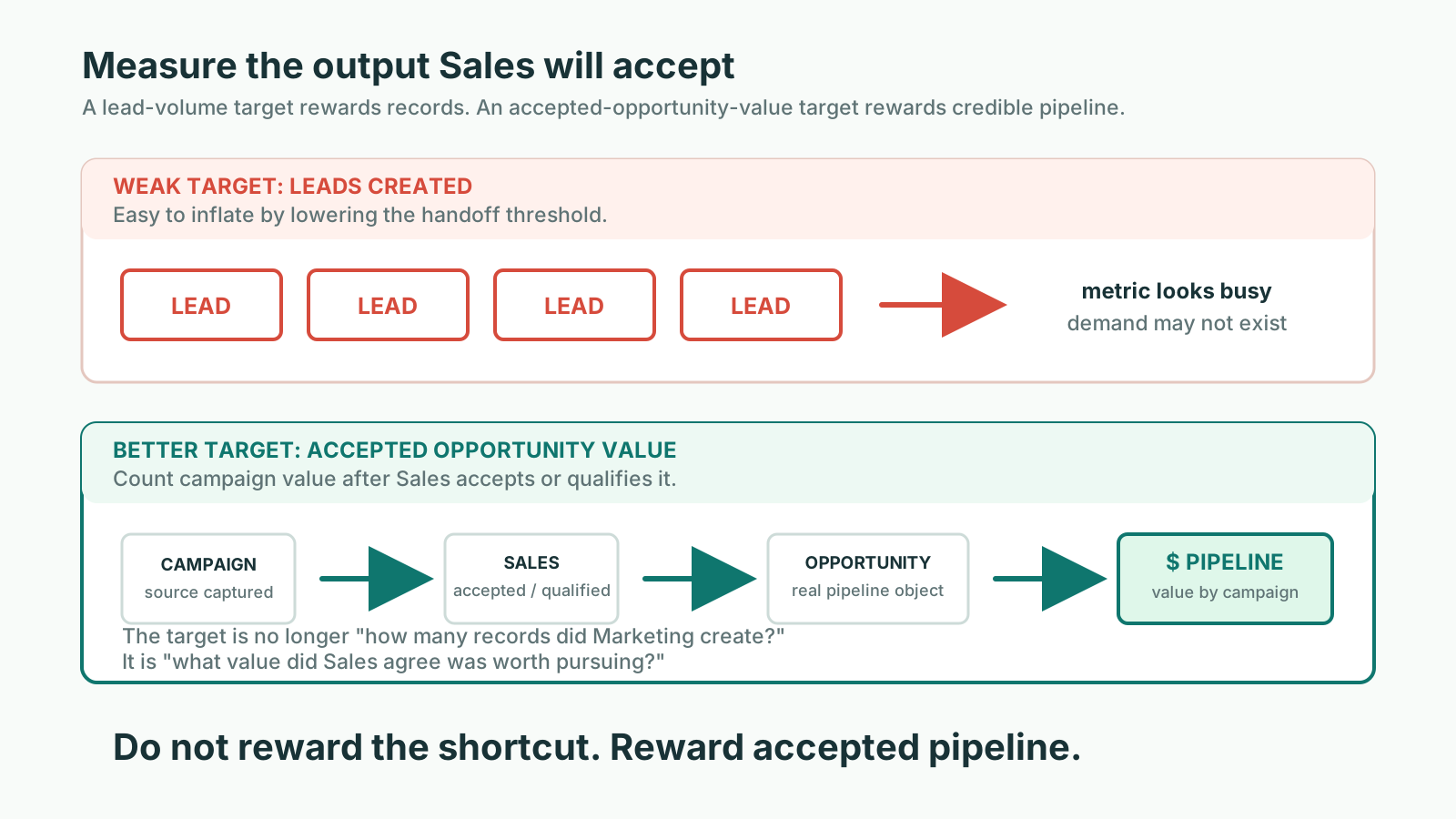
This is where the governance gets teeth. If Marketing is targeted on the number of leads created, the system rewards the production of records. If Marketing is targeted on the value of campaign-created opportunities after Sales has accepted or qualified them, the system rewards demand that Sales agrees is worth pursuing.
Forrester's opportunity-centric revenue process makes the alignment problem explicit: Marketing is often tasked with generating interactions with individuals while Sales is focused on revenue and deals. Forrester says that "this needs to end" and argues that Marketing, revenue development and Sales should focus together on identifying, engaging, qualifying and winning opportunities.
Source: Forrester, An Opportunity-Centric Revenue Process Is All About Context.
That matters here because a lead count is too easy to inflate. An accepted opportunity value target forces a second gate. The campaign can still get credit, but only when the handoff survives Sales review or qualification and becomes a credible pipeline object with value attached.
A lead target asks Marketing to create records. An accepted-opportunity-value target asks Marketing to create something Sales agrees is worth pursuing.
Salesforce's B2B pipeline guidance defines pipeline value as the total potential revenue of active opportunities and notes that managers monitor it against future revenue targets. Pedowitz's sales-acceptance guidance adds the operating discipline: acceptance should be validated with downstream outcomes such as meetings held, opportunity creation and pipeline influence. Together, that gives a cleaner campaign target: not raw leads, but the value of opportunities sourced by the campaign after Sales acceptance or qualification.
Sources: Salesforce, B2B Sales Pipeline; Pedowitz Group, How Do You Measure Sales Acceptance of MQLs?.
Pipeline pollution
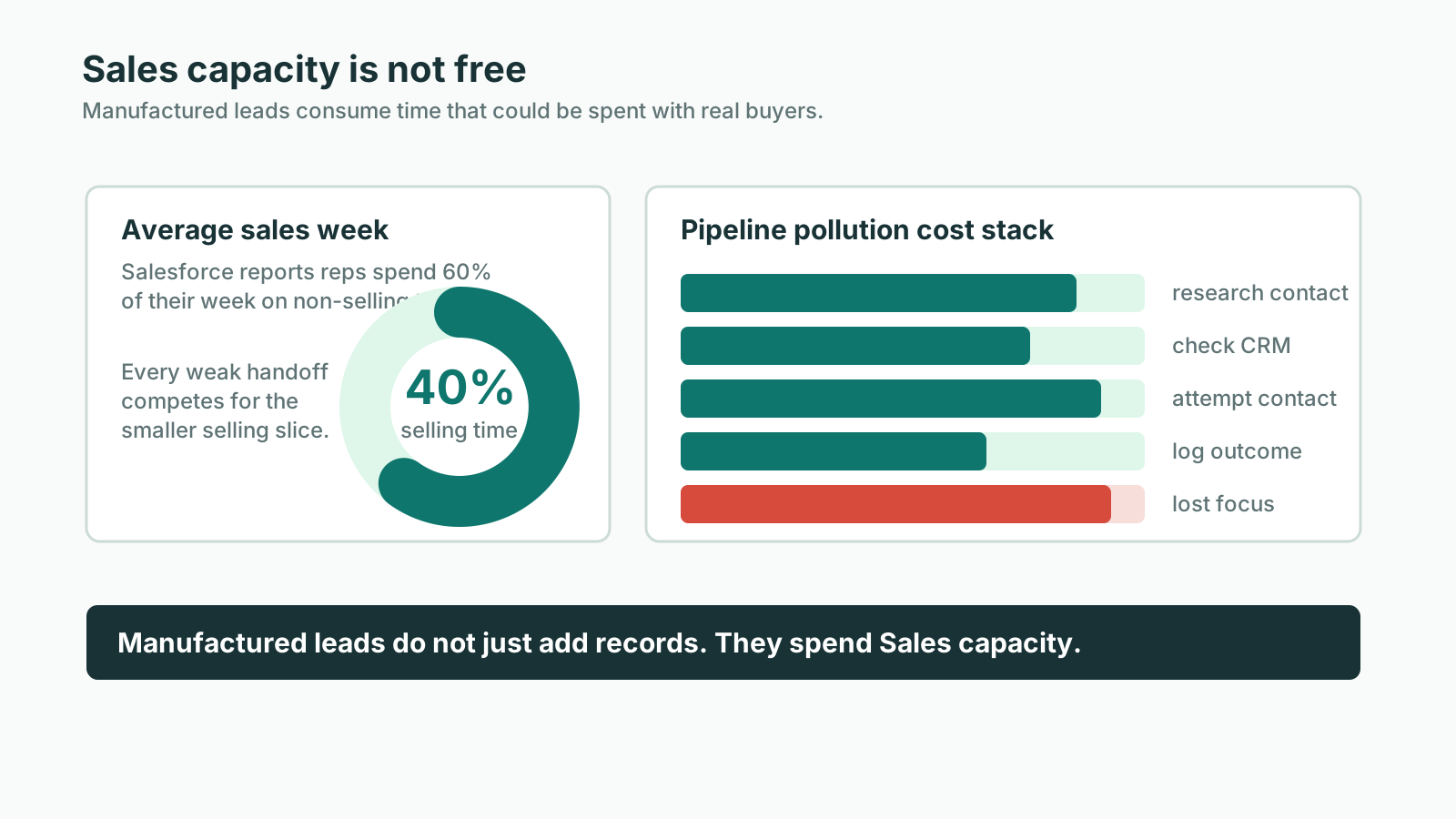
Sales capacity is finite. Every manufactured lead carries a cost: research the contact, check the account, inspect CRM history, decide whether to call, personalise an email, log activity, schedule follow-up, then eventually close, reject, recycle, or ignore the record.
Multiply that by hundreds or thousands of contacts whose only demonstrated behaviour was opening an email. Marketing has not merely added weak data. It has redirected Sales time away from stronger prospects and real buying conversations.
That capacity problem is not theoretical. Salesforce's 2026 sales statistics report that sales reps spend 60% of their time on non-selling tasks. When the available selling window is already constrained, a weak handoff is not a harmless record in a database. It is a claim on scarce time.
"Sales reps spend 60% of their time on non-selling tasks."
Source: Salesforce, 40 Sales Statistics that Reveal How Teams Can Succeed in 2026, February 3, 2026.
Forrester: individual engagement is not the revenue end goal
Forrester has been pushing B2B teams away from over-reliance on individual MQLs and toward buying groups. In A Lead Is Not a Good Lead to Me, Kerry Cunningham writes that a good lead comes forward as part of a buying group with:
"the resources and intention to purchase"
Source: Forrester, Kerry Cunningham, A Lead Is Not a Good Lead to Me: The Lead Quality vs. Quantity Discussion, October 25, 2019.
Forrester's public Palo Alto Networks client story is even more direct about the danger of lead volume as a proxy for revenue. It says a focus on individual MQLs was failing Palo Alto Networks and that higher volumes of MQLs were not translating into more won business. The shift to buying groups produced a reported 17% higher closed-won rate and stronger pipeline progression when multiple people were attached to an opportunity.
That is the opposite of an "opened one email, call Sales" model. If an individual MQL can be too thin a container for B2B demand, a single email open is thinner still.
Source: Forrester client story: Supercharge B2B Pipeline And Win Rates With Buying Groups.
In another public Forrester piece on moving away from MQLs, Terry Flaherty, Amy Hawthorne and Maria Alexandrou warn that ignoring signals beyond the MQL can lead to "poorer conversion and increased waste." That is the operating cost of a lead-centric process: the organisation debates the label while missing the broader buying context.
Source: Forrester, Saying Goodbye To MQLs: What's The Business Impact Of Leaving MQLs?
HBR: poor alignment teaches the wrong behaviours
Harvard Business Review's classic Ending the War Between Sales and Marketing describes the mutual suspicion that forms when the functions do not work as one system. Sales often sees Marketing as out of touch with the marketplace, while Marketing sees Sales as too focused on individual customer experiences.
"each group often undervalues the other's contributions"
Source: Harvard Business Review, Philip Kotler, Neil Rackham and Suj Krishnaswamy, Ending the War Between Sales and Marketing, July-August 2006.
Manufactured leads pour fuel on that divide. Sales does not experience the problem as an analytics debate. Sales experiences it as a person who has no idea why they are being called, no evident project, and no demonstrated desire for a sales conversation.
HBR's How the Rift Between Sales and Marketing Undermines Reps reinforces the same organisational consequence: when Sales and Marketing are split, reps lose the support and clarity needed to work effectively with customers. Bad handoffs are one way that split becomes daily muscle memory.
The Journal of Marketing gives that muscle memory a name: the sales lead black hole. Sabnis, Chatterjee, Grewal and Lilien describe "the 70% of leads generated by marketing departments that sales representatives do not pursue" and link pursuit to lead prequalification, marketing lead volume, Sales experience and performance.
"70% of leads" are not pursued.
Source: Sabnis, Chatterjee, Grewal and Lilien, The Sales Lead Black Hole, Journal of Marketing, 2013.
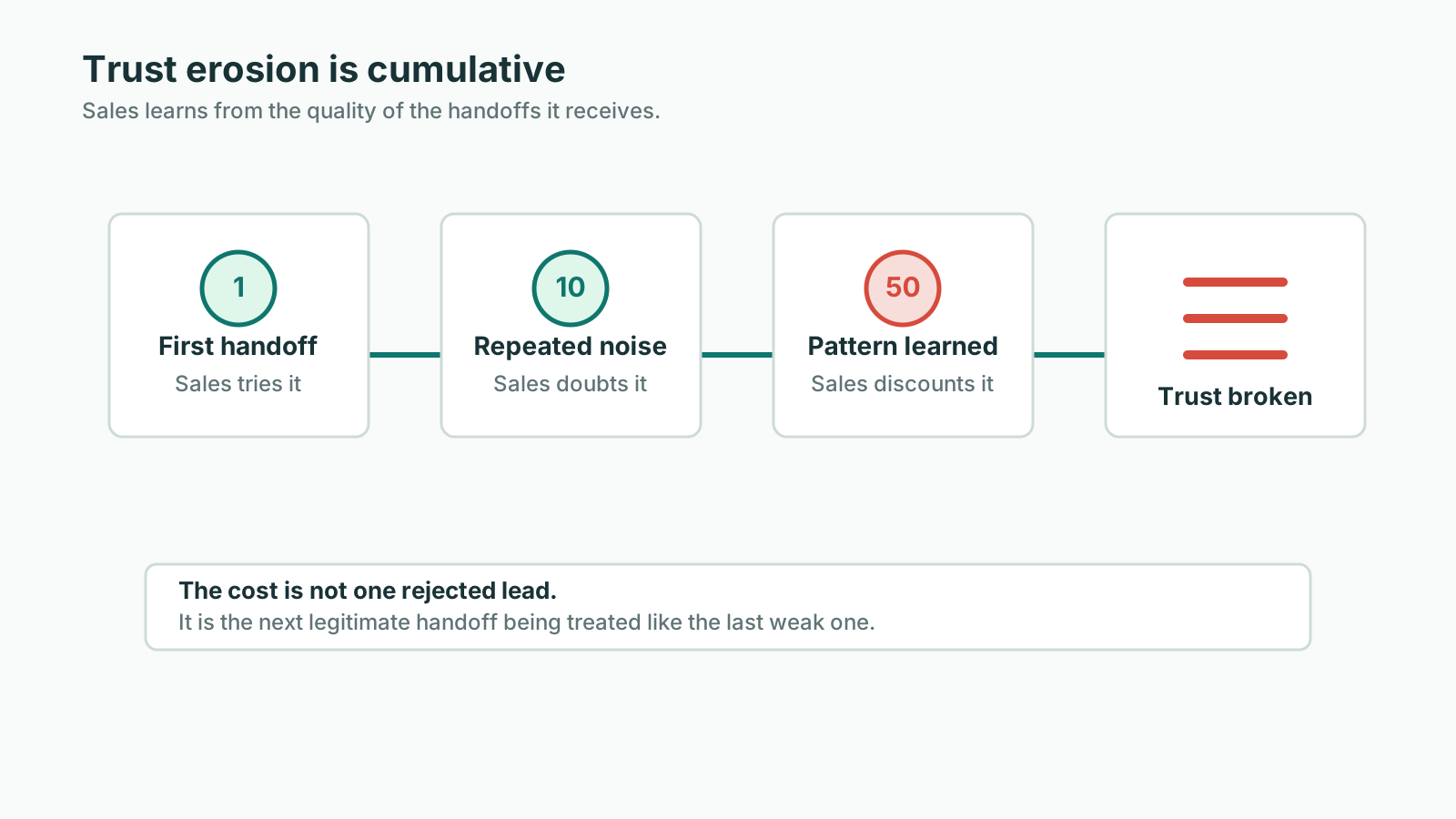
Trust erosion is the real damage
The first time Sales receives an email-open handoff, they may try it. The tenth time, they become sceptical. The fiftieth time, they learn the lesson: Marketing leads are not real.
That lesson is expensive. When Marketing eventually passes someone with meaningful demand, Sales may treat the record like every weak handoff that came before it. The organisation has trained sellers to discount the very signal it later needs them to trust.
Metric contamination
Once email opens are treated as leads, Sales conversion rates become misleading. The denominator is flooded with people who never demonstrated sales intent. Then the organisation can ask the wrong question: why did Sales convert so few Marketing leads?
The better question is: why were those records called leads in the first place?
A conversion metric only means something if the input population is coherent. If the input is a mixture of sales-ready buyers, passive readers, accidental curiosity, customers, students, competitors, and people with no current project, the rate no longer measures Sales performance cleanly. It measures the noise created by the handoff definition.
The customer experience cost
Opening an email does not imply a desire for sales outreach. A customer can open because the subject line is interesting. A prospect can open because they are vaguely aware of the brand. A contact can open because they are looking for information, not a call.
If the next experience is a sales rep arriving because a connector silently converted that open into a lead, the company has turned low-friction content engagement into unwanted pressure. That does not create trust. It makes the brand feel like it is listening for the weakest possible excuse to interrupt.
Salesforce's 2026 statistics add a harder commercial edge: 73% of B2B buyers actively avoid sellers who send irrelevant outreach. If Marketing turns a casual open into a sales interruption, it is not merely risking a low conversion rate. It may be training the buyer to avoid the company.
Source: Salesforce, 40 Sales Statistics that Reveal How Teams Can Succeed in 2026.
Governance: stop letting the threshold drift
This is fixable. The answer is not to ban email engagement from the revenue process. The answer is to stop pretending a single open is demand, and to stop letting technical connectors bypass the agreed lead-creation event.
- Agree the lead definition jointly with Sales: Sales must have a real voice in what they are expected to work.
- Distinguish engagement from demand: an open can inform nurture, segmentation, content interest and next-best-action logic without becoming a sales handoff.
- Protect the form-submit event: if a form submit is the lead trigger, do not let a connector create the same lead outcome when no form was submitted.
- Monitor acceptance and rejection reasons: track why Sales accepts, rejects, recycles or ignores handoffs, then use that feedback to improve criteria.
- Target accepted opportunity value: set campaign goals around opportunity value after Sales acceptance or qualification, not raw lead count.
- Audit incentive schemes: make sure targets, dashboards and compensation cannot be gamed by redefining what counts as a lead.
- Protect the handoff: require evidence of fit, need, buying-group activity, explicit request, or stronger behaviour before asking Sales to spend capacity.
Conclusion
Calling an email open a lead does not create demand. It changes a database classification.
Routing that open through a form-submit connector does not change the underlying fact. The buyer did not submit the form. It may help Marketing hit a number. It may make a dashboard look busier. It may create a large pile of records with impressive labels. But Sales will experience the truth quickly: weak handoffs, wasted time, contaminated metrics, confused customers, and a declining willingness to believe Marketing the next time it says someone is ready.
The better executive target is harder to game: campaign-created opportunity value after Sales has accepted or qualified the handoff. That does not make attribution perfect. It does make the incentive cleaner.
That isn't pipeline generation. It is pipeline pollution.
FAQ
Is an email open ever useful in a nurture? ⌄
What should count as stronger evidence of demand? ⌄
What should Marketing be targeted on instead of lead volume? ⌄
Why is this a governance issue? ⌄
Want lead handoffs Sales can actually trust?
I help enterprise teams tighten Eloqua-to-CRM handoffs, define clean qualification rules, and build feedback loops that protect Sales capacity instead of flooding it with weak records.